Books
9/13/202611 min read

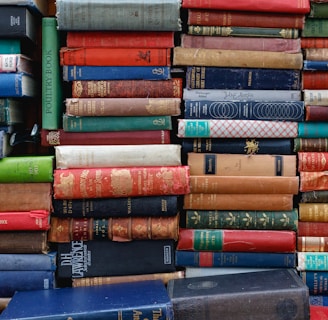
Early Irish Lyrics: Eighth to Twelfth Century, Gerard Murphy
If I could save only two books from the conflagration, this would be one of them. (The other is not the Bible.).
Murphy knew and loved this literature (as I do, so I am prejudiced). He gives a good selection with full scholarly apparatus. The vocabulary can teach you a lot about Early Irish. The translations are EXCELLANT. The old Oxford Press edition is solid enough that it might make it through a conflagration without any help from me.
The King of Elfland's Daughter, Lord Dunsany
Wonderful book, and the specific glory is in the language. Some Edwardian languor there, but mostly just a restatement of an oral style, and one must let yourself go into it. You will not be moving at internet speed, but there are stories can only be told at a slower pace.
Dunsany was an old (Anglo) Irish Meath family, but he was English in education and tradition. The Irish stuff still suffuses the book, though not overtly.
Early Irish Literature, Myles Dillon
Originally published in 1948, but there is still nothing comparable. It easy-to-read a popular introduction of 192 pages
The Fenian Cycle in Irish and Scots Gaelic Literature, Joseph Flahive
A scholarly survey published in 2017 that notes most of the texts, touches on current trends in scholarly interpretation and gives a completer bibliography. Note that this is not a collection of texts. It is part of a University College, Cork series of shortish (110 pages here) popular introductions to topics in Irish literature. and is modeled in an earlier series that Myles Dillon organized and (Irish literature topics) wrote.
The Year in Ireland, Kevin Danaher
A pretty complete description of Irish calendar customs, synthesizing earlier and often obscure accounts. Danaher was the Folklore Commission's Physical Culture man, so don't look for knowledge of Irish literature or comparative religion or any that high-falutin' theory here.
The Festival of Lughnasa, Maire MacNeill
A unique book from Eoin MacNeill's daughter that does reflect knowledge of Irish literature and comparative religion, combined with a massive questionnaire that the Folklore Commission organized when there were old people in many parts of Ireland who still knew about old stuff.
Lughnasa was August 1, the harvest festival and focused on the very important god Lugh
Customs in Common: Studies in Traditional Popular Culture, E.P. Thompson
A compilation of long essays on various topics in 18th century English history, not a unified book, but the essays are on key topics and one can gain a clear understanding of the late 18th century forced shift from a custom-based society in which ordinary people had at least some say, to a market-based society.
One can also gain a clear understanding of how to do and how to write history. No one else has had Thompson's mastery of the archives and therefore of the particular and of the human, as well as his ability to synthesize, to draw theoretical models from the particular and the general, and also to write clearly and well.
The field of history has recently (like other academic disciplines) become often a mere vehicle for individual scholars' aggrandizement or playgrounds of theory. This book shows it needn't be so.
Tales of the Fairies and of the Ghost World Collected from Oral Tradition in Southwest Munster, Jeremiah Curtin, 1895
These short stories are real people in 1890s Ireland (when people dealt every day with the world as it is and never saw a computer) telling about things that happened to them or to others in the community, in their own time or before. The stories are fascinating and well-told with the Munster directness. Not every modern reader will appreciate that or the lack of filtering and fluff, but some will,
Eigse Chairbre. Filiocht o Chairbreacha I gCo. Chorcai Agus On Gceantar Maguaird 1750-1850, Blathnaid Ui Chathain
The author skillfully shows the reader a world that is unfortunately lost and lets us hear voices otherwise almost completely lost.
She has gone through all the manuscripts and gathered songs and poems made in the area of County Cork extending from roughly Timoleague to Drimoleague/Bantry, gathered information on the makers, supplied notes and vocabulary, 533 pages' worth. It is great. (No English translations though).
Irish 18th century poetry, by the way, is also great. Not every poem here is among the best, but all are good. No translations.
The Wedding Poems of Dáibhí Bruadair, Margo Griffin-Wilson (Editor)
A very good entry point to understanding the 17th century Irish world and its literature. A nice rainy day book too.
Literature in Irish, Proinsias MacCana
A short book written by still the best and wisest and most discerning of Iris=h language scholars. Still the best introduction too.
Blackcock's Feather, Maurice Walsh
A good novel and engrossing read.
Walsh didn't really know much about 16th century Ireland, and grew up reading circa 1900 popular adventure fiction, but when his heart was in it, he wrote well and truly.
Visions and Beliefs in the West of Ireland, Lady Gregory,
A remarkably good 365-page book published in 1920, the fruit of many years conversations with the then Irish-speaking small farmers of south Galway and nearby north Clare. Lady Gregory was a landlord, but one long involved in the Gaelic revival, and , for some reason, people talked fairly openly to her. Certainly her own predilictions and personality filtered what she heard, but there is not a lot of author-speak or of the author in the stories. They are clear prose; basically, she says, "the very words in which the story had been told." Gregory was a mentor to Yeats, and it is interesting to compare her writing to his gushy, fulsome, ill-informed and self-centered writing on similar topics.
Sections of the book include Seers and Healers ; Away: Herbs, Charms and Wise Women: Astray, and Treasure: Banshees and Warnings: The Fighting of the Friends: Appearances: Butter: The Fool of the Forth; Forths and Sheoguey Places. There have been almost no similar books, in Irish or English. Books of individual storytellers' stories include some similar stories, but there is no collections (intelligent and well-informed) on these topics.
Amhrain Chuige Uladh, Muireadach Meith
A great collection, mostly from Omeath, County Louth, originally published in 1927. Includes forty songs. This modern edition (in modern type) includes sheet music as well, and almost a hundred pages of great notes about other versions of the songs, places published, the singers, etc.
Padraigin ni hUallachain's book A Hidden Ulster, sheds a lot of light on many of these songs, as well, besides being a great book in itself, and much motre accessible to contemporary people, with lots of photographs, translation, noters etc..
Mac na Michomhairle, Seosamh Watson
A great and very engaging and entertaining, probably 17th century, Irish tale (Leitrim? Roscommon? Oriel?) of about 20 pages that hovers on the margin of the novel, dealing with love, longing and the Otherworld. The book is 200 pages, and the editor investigates the background, themes, sources (including a list of known manuscripts), possible authors and so on. Includes also an oral version taken down in 1842 in Leitrim,
The kind of book that I love. No translations, though.
Seanachas Phádraig Í Chrualaoi, Padraig O Crualaoi
Two hundred pages of traditional poems of the 18th and early 19th century Musgrai and central county Cork, taken down from the memory of a contemporary poet in 1943. A fascinating illustration of the literary history of a mostly oral tradition. (Very few of these poets wrote manuscripts.) Also contains lore about the poets, and anecdotes. Can be usefully read beside Cois an Ghaorthaidh, Diarmuid O Muirithe's edition of a more "scholarly" selection of 18th and early 19th century poems from the area (33 poems), taken from manuscripts and from oral tradition, with shortish biographies.
Foamy Sky: The Major Poems of Miklós Radnóti, Miklós Radnóti
Incredible poems, particularly the later ones. Direct clear utterance from a man who did not wither under the horror. Total absence of posturing and bullcrap. Shows why writing matters.
The English translations are very skilled. None of it has anything to do with Ireland.
Seana-Chaint na nDeise II, Risteard B. Breatnach
If you love language, and know a fair bit of Irish, this is a book for you. It's basically a dictionary of 450 pages (regular print size) of words heard from native speakers of Waterford and south Tipperary Irish between 1908 and 1922, illustrated by many phrases that illustrate the range of meanings, and also the incredible richness and vigor of Irish idiom. (Myles na gCopaleen once commented that if scholars had calculated that ordinary speakers of English used a vocabulary of 3000 (300?) words, then ordinary traditional Irish speakers used 300,000, and often took pride in never using the same word twice in their lifetime. He was joking, but you see the point.) The editor provides pronunciation in international phonetic script for a good many, taken from speakers alive in the 1970s. It is, physically, a good solid book that will not fall apart unless you use it to prop up a junked car all winter.
The People of the Sea, David Thomson
An enjoyable book, structured as reminiscences and retellings of stories from the west coasts of Scotland and Ireland (and Orkneys) that focus on the interactions of seals as magical or at least also human beings; their interactions with humans. The author has a warm sympathy for human societies now vanished, and for seals, and writes well. As someone who lived years in those societies, though, he does sometimes indulge in some fey mush, as well.
"Fey mush"? It is a question of the style, though that style arises from the person.
Though it will not be obvious to a reader who doesn't know the communities and stories, Thomson is too present in the book. Not overtly, and not so much in the stories themselves, but in the descriptions of his travels and interactions, where his identity as a member of a superior society (British middle class) traveling among the natives -- in this case picturesque "natural" Gaels -- and also his "personality", flavor the interactions that he describes in sometimes uncomfortable ways. I'm thinking of the encounters with the Hebridean girl; and various children, in particular. (These encounters are illuminated by his other book (Woodbrook House?). At the risk of being an idiot, I might say that Thomson as a person was an outsider who wanted very much to be part of the warm close human communities that he describes here, but that something in him prevented that. I'm probably overstating it, and, again, it won't be an issue to most readers.
By the way, versions of most of the Mayo stories can be found in the book The Living Landscape: Kilgalligan, County Mayo (1975).
Young Art and Old Hector: A Novel, Neil M. Gunn
This is one of those unassuming books where the craft skill of the writer creates a medium so utterly clear that the reader simply experiences the story. It is a good story, too. Gunn was an eloquent spokesman for the Highland (Gaelic) ethos of the early 20th century, and also interested in Zen. The wisdom and humanity of the old community, as well as the clear loving attention of Zen etc., shine through here, so that, though nothing that noteworthy happens in the book, but there are few better reads. It is a sad commentary on what we have lost in literature and in society since. (He also perfectly catches the Gaelic approach to life and language in this book, though in English.)
Ireland, Irishmen, and revolutionary America, 1760-1820, David Noel Doyle
This is a remarkably good book (published around 197 or 1980) from an Irish historian who specialized in American and Irish American history, and who therefore, it may be, had a much clearer and more accurate view of the nature of 18th century colonial Ireland than did Irish historians specializing in that period of Irish history. The book can be read as a guide to that society.
There's a good bit of original research embodied here on topics like indentured servants and Irish/North American shipping. Doyle also looks at topics like the nature of the various strands of emigration to America, 1715 - 1776; the role of the Scots Irish and native Irish in pre-revolutionary society; their respective roles in the revolution' the impact of the American Revolution on various elements in Irish society, and the evolution of American society up until 1800. A lot of this is based on his own research, and focuses on specifics of person, place and event, rather than on generalities.
The book is not used to hang an argument on or to advance a career, but rather to explicate the past, and the author brings intelligence, organization and good sense to that task. He writes well, and it is an enjoyable book to read.
Rob Roy MacGregor: His Life and Times, W.H. Murray
Remarkably well-informed, intelligent and well-written.
When the Mountain Fell Charles-Ferdinand Ramuz
A simple story of French Switzerland in powerful language. Very skillfully done, though, and a breath of fresh air in this time when stories are conceived of and read as commodities, rather than communications about this beautiful perplexing world. Nothing at all to do with Ireland...
Travel Light, Naomi Mitchison
Well, she's Scottish and lived many years in the last Gaelic-speaking community in Kintyre...
It at first seems just another apparently inconsequential British fantasy (like Diane Wynne Jones, Harry Potter, etc.), but the clarity and strength of the language, and of the story itself, take this book to a level that Wynne Jones, H. Potter, etc, are unaware of. The book is one of those paradoxical classics, like D' Angulo's Indian Tales, where the not-terribly-spectacular narrative transpires in some utterly clear medium that gradually becomes utterly gripping, and thrrough which wisdom shines.
Riobard Bheldon, ed Amhrain agus Danta, ed.Padraig O Machain
This is a minor classic, that is, in its quiet way, quite major, and it is difficult to express exactly why that is.
The book itself is a beautifully put-together object; well laid-out, well-printed. The editor's language in the Forward and notes is supple, effective and quietly eloquent, as good Irish often is. He has tracked down all sorts of interesting information about the poet, the songs, and people associated with the poet, and includes many evocative photographs. He sets the poet in his time and place very effectively, yet also communicates the poet's individuality.
Riobard Bheldon, by the way, was a minor poet who lived in Co Waterford, c. 1835 - 1914. His songs deal with episodes of everyday life in a fairly typical way, and also with the matter of the Gaelic Revival. Why do they come across as so effective here? It may be that placing any material in a beautiful container will make that material also beautiful, but that is not it. These poems live in that specifically traditional Irish-language poetry intersection of wry intelligence, passionate restrained emotion, exaltation/intoxication of patterned language, and resonant language that evokes 2000 years of previous poetry. Altogether, these afford glimpses into the heart of Ireland. (No translations)
The Roots of Dependency: Subsistance, Environment, and Social Change among the Choctaws, Pawnees, and Navajos, Richard White
A thoughtful, well-written book with application far beyond the study of American Indian societies.
Using a sophisticated nuanced version of dependency theory, it examines in detail the processes by which three Indian societies--Choctaw (Mississippi), Pawnee and Navaho--were incorporated as dependent minorities within the expanding American state. Neither the Choctaw nor Pawnee were ever defeated militarily, yet the decisions they made in relation to trade with American society, and the ways that those decisions gradually restructured (distorted? wrecked?) their societies and relationship with their specific environments, meant in the end that they could not only no longer feed and clothe themselves from their own land and resources, but were left with almost no choices but those Americans made for them.
This is how domination happened.
On Another Man's Wound, Ernie O'Malley
A great book by a very intelligent and insightful man. You'll learn more about early 20th century Ireland and the Irish uprising from it than from a box load of others.Well-written and gripping.
Guerilla Days in Ireland: A Personal Account of the Anglo-Irish War, Tom Barry
A great leader, I imagine, but not a great writer. Ernie O'Malley's books are much much better.
The Land and People of County Meath, 1750-1850m Peter Connell
.A great great book of scholarship and restrained (com)passion. There is no better on early 19th century Ireland. A good read too.
Maps and figures to your heart's content, clearly-developed argument, and good writing
The Great Hunger: Ireland 1845 - 1849, Cecil Woodham-Smith
A well-researched, passionate, skillfully-written account that cares more about humanity than academic fashions.It's just slightly episodic, so it misses one or two important themes and developments, and it ends before the Famine did, but a very important book for all that.
Information has become more readily available since this was written, and the understanding of the structure of Irish society is more solid now than then. The Famine was an industry for a few years around 1996, so there are a lot of Famine books now, but this is still probably the best one to begin with.
Email : tighsagainne@fastmail.com (all lower case)
© 2026. All rights reserved.