

Ink meets tradition.
June 16, 2026
I know this is a hackneyed attempt at an excuse for not adding a post here this weekend, but a dump truck working for the electric utility came rushing down the road with its empty bed raised, and it severed the phone/internet line, and I am fighting with the utility since to get it repaired so we have internet. (No cell service.) I will post as soon as I can
A Scottish Gaelic Song.
I'm translating from The MacDiarmaid MS Anthology, edited by Derick S. Thompson, published by the Scottish Academic Press in 1992.
This is a manuscript of current songs and poems complied by a minister from central Perthshire in 1769 and was only discovered in 1968. About half are love songs, and that's what we've got here.
'S luaineach mo chadal anochd.
Ge beo mi, cha bheo mo thlachd,
Mo chridh air searg ann am uchd
Air dubhadh mar an gual gu beachd
Tonight my sleep is fitful
I live, but I’ve lost every joy.
My heart has withered in my breast,
and it has blackened like the coal.
Down in Earrach, there yonder.
lives the loveliest of women, the fairest of body;
her teeth are white as chalk,
her voice is sweeter than string-music.
Like the foam of fair water,
like the swan on the flowing stream,
a precious jewel like the falling snow,
my love for you grew all unnoticed.
Fair sapling of the golden hair,
your head glimmers like the gold.
your cheeks are like the rowan berry,
they’re alight with the beauty of the rose.
White fingers and palms like ivory,
a shining breast of a fair color;
this love that I gave you;
ochone, I’m in a desperate way.
I will not climb the hill or mountain,
there’s a heaviness in my step.
To ascend Iuchair na Cist’ is a struggle,
though that’s but a little lowly hill.
Like the topmost grain of the crop,
like a sapling in the verdant wood,
like the sun that conceals the stars,
beside you, all women fade away,
May 23, 2026
Sliabh na mBan is a mountain in south Tipperary. It is also a well-known song about the United Irishman rising in 1798.
Some say that the Cork poet and scholar Peadar o Longain composed the song, but that’s not certain. There's no doubt, however, that the song has almost no connection to the nineteenth century patriotic song, Slievenamon, made by Kickham and still sung at Tipperary sporting events. The difference between the two songs is striking. The earlier--as I hope to show here--is sharply and effectively imagistic, concise, and the product of a rigorous intellect. Kichklam's song is sentimental, mushy, imprecise and diffuse.
To understand the older song, one needs to remember that the native Irish ("Gaels") in this period were in a situation similar to that of, say, the black South Africans thirty years ago. Yes, Corkery's Hidden Ireland was actually a lot more complicated in terms of social structure than he thought, and a hidden Catholic gentry did indeed exist in the form of middlemen renting estates from the mostly English landlords. Yet by this period, many of these middlemen had been absorbed into the colonial culture and were not only discarding "Gaelic" culture, but doing everything they could to differentiate themselves from the mass of peasants who were competing desperately with one another for access to rented land; those, that is,who had not already sunk into into big rural slums by the roadsides or on bogs.
As De Tocqueville, the French traveler, noted, there was not a command a landlord could come up with that the Irish would not obey. They did not obey out of love for their landlord, but because he was part of a system that had power of life and death over them. If a tenant displeased a landlord, the tenant would be evicted and likely be forced to join the mass of other evicted former farmers competing for the few available jobs as farm laborers. Or the landlord, as likely local justice of the peace, could charge the tenant with a crime and then condemn him at the next sitting of court.
Yet there was another Hidden Ireland, one invisible to the landlords and to official society and to Corkery and Kickham. A lot had already doubtless been forgotten by 1798, but in the many areas where Irish was still spoken, people still kept a knowledge of what had been before 1601 and the wars of the 17th century. They knew who were the current representatives of the old royal and noble families, and who had lived where. They knew their local history; the name of every rock and hill told of the ancestors and things they had done. They knew the supernatural realities of their place--the fairy queens and so forth. They knew the traditional history of Ireland. Poets and scholars kept a national or at least regional consciousness alive.
So the gentle cone-shaped mountain of Sliabh na mBan that stands like a throne over the southeast Tipperary plain had its ancient traditions and symbolic importance. It is, after all, Sliabh na mBan Bhfionn: Mountain of the Fairhaired Women, most likely otherworld women, (and not the Mountain of Fionn's Women, though there is a story about him and them.) The otherworld dwelling of Sid ar Femen is here. (Femen is the old name of the plain.) Fionn Mac Cumhaill obtains magical insight when his thumb is caught in the door of the otherworld dwelling, as he protects the human world from theft of the land's fertility. The otherworld lord Bodhbh Dearg dwells there, and he is the father of Sadhbh, mother of Fionn's son Oisin (Little Deer) who embodies a union of wild and human.
The mountain thus enters this song here not as an agglomeration of rock and dirt, but as a well-known element in local history and traditional consciousness; a witness of what had been and what still should have been, in the view of the Irish, once the evil times were over and the world had righted itself.
The Verses.
The song focuses on the image of the mountain and always returns to it for a stanza's final image and line, but the events dealt with are those of the Rising as a whole. The skirmish on the mountain was actually a very minor unimportant one.
The song begins with a common motif used to express the fact that the world has been shoved out of harmony by a tragic event. The blackbird's beautiful song, common backdrop to Irish country life, is silent, and the fertility of the land has ended. The otherworld woman laments, as for a death, stating that usual life has ended, that there is no rest. A group of enemies has come together and controls the land, and we will be battered to pieces by them here on the slopes of the mountain.
In the second verse, a defeat is mentioned, and the enemies with their power of horses and swords and muskets jeer at country weapons like pikes (the common military weapon of the late 16th century) and farm implements. The Irish have not come together; they moved here and then there on the mountain, uncertain like a herd of cows with no direction.
The Irish acted without forethought, and were defeated because they did so. If they had only waited until others had joined them, and had God's help, they would have been victorious on the slopes of the mountain.
Then we see the "Gaels" smashed to pieces by English cannon at the battle of New Ross, hiding behind any shelter they can find. The power of the conqueror and of his technology overwhelms the people of the place, and by implication, the mountain, the Otherworld; Eire. But we will pick up our country weapons again, and some day, we will make them shake in their boots on the slopes of the mountain.
But this is only the beginning. Out on the sea, French fleets are gathering and help is coming. We will not go along with the oppressive machinery of the colonial economy, and there will be light and joy on the mountain--the world will return to its own natural way.
The French are ready to act; the masts of their ships pierce the sky, and they are coming here to place those who have suffered back in their own places again, to reestablish the way of things. If I was sure of it, I would be merry as the blackbird in the tree. One day soon, horns will sound celebration on the sunny mountain.
(A lot about Ireland is explained by the fact that, as we know, help never did come, and life continued to drain out of traditional Ireland until today it is barely alive, even in memory.)
Well, you know what? Set out like that, the song sounds feeble and stereotyped--just another patriotic come-all-ye. That it is not, is due to the succession of images as performed, and music of the words. The whole is greater than the sum of the parts.
It's amhran, so watch out for the pattern of vowels in the accented syllables.
Here's what I get for the first verse:
i a e o ea
i a e o ea
i i e o e
i e i ae a
(Most every i, e and o are long, but his keyboard won't allow me to add a fada.)
Second verse:
a ao a e
ao i e u e
u w i a e
u ao i ia a
The pattern is roughly the same all through, though no verse is exactly the same as another. Some of the lack of continuity in vowels is more apparent than real, given Deisi and general Munster pronunciation. The translation is very quick and makes absolutely no pretension to quality.
I'm using Nioclas Toibin's text (died 1966; not the well-known singer) from Duanaire Deiseach, Sairseal agus Dill, 1978. He learned the song at the beginning of the 20th century from Padraig O Faolain from Cill na bhFraochan near Dungarvan.
I omit one verse--what would have been the second-to-last, concerning prisoners freed--by accident.
Sorry too about the lack of fadas. Yes, it is a travesty of the Irish, but I still cannot get the program to permit them.
Ni airim vearsa o lon no o cheirseach
a's ni fhasann fear insna coilltibh ceart;
Nil suim ag an speirbhean i sport no i bleisiur,
ach i ag gol a's ag beicigh a's ag reababh bas,
a ra ngan faothaomh, ni bhfhaigheadh na seimh-fhear
aon oiche in Eirinn na uain chun reast
ag an trup so meirligh a's iad ag teacht le cheile,
a's go mbuailfear caoch sinn ar Shliabh na mBan
I hear no music from the blackbird or his mate,
and the grass grows no longer under forest trees;
the sky woman finds no joy or pleasure,
she weeps, screeching and striking palms together;
saying again and again that the strong men cannot find
even one place to lay their heads or to sleep the night,
on the run from these bastards who've gathered together,
and that we'll be beaten blind on the slopes of Sliabh na mBan.
A's is oth lion feining bualadh an lae ud
do dhul ar Ghaeil bhocht a's na ceadta a slad,
mar ta na meirligh ag deanamh geim dinn
a's ag ra nach aoinne leo pice no slea.
Nior thainig ar Major i ndtus an lae chuinn
a's ni rabhamar feinig i gcoir na i gceart,
ach mar a sheolfai treada de bha gan aire
ar thaobh na greine de Shliabh na mBan.
It is my sorrow and regret, the beating that day
inflicted on the Gaels, and hundreds wounded or hurt;
the bastards are jeering, laughing at us poor fools
saying they're not afraid of things like pitchforks and shovels.
Our commander never came to us as day began
and we ourselves were only confused and without order
like a herd of cows wandering with no herdsman
on the slopes where the sun rises on Sliabh na mBan.
Mo lean leir ar an dream gan eifeacht,
nar fhan le eirim istoiche no stad
go mbeadh duiche Deiseach a's an tir ar fad
ag teacht lena cheile o'n tir aneas;
bheadh cunamh De linn a's an tir ar fad,
a's ni dhiolfadh meirleach darbh ainm Neil sinn,
a's bhuafai an reim linn ar Shliabh na mBan.
Sorrowful fools, you are a crowd without sense or strength
who did not wait until night to rise up, or wait
until the Deisi country and whole land together
had gathered united here from lands to the south:
until our camps were laid out, with strong forces:
We'd have had God's help, and from all the land,
and no bastard named Neill could betray us for pay:
the field would have been ours where the sun rises on Sliabh na mBan.
Is e Ros do bhreoigh a's do chloigh ge deo sinn,
mar ar fagadh morchuid dinn sinte lag,
leanai oga ina smaola doite
a's an meid a fhan beo dhiobh cois clai no scairt;
ach geallaim fein dhaoibh, an te a dhein an foghla,
go mbeamna i gcoir do le pic a's le slea,
a's go gcuirfeam Yeoman ar crith ina mbroga,
ag diol a gcomhair leo ar Shliabh na mBan.
It is in New Ross that we were battered and thrown down,
there where so many were stretched out, wounded or dead;
young children made into burnt black meat,
and any still alive sheltering behind walls and bushes.
But I promise you, you ones who did that slaughter,
that we'll be ready for you with pitchforks and shovels,
We'll make the militias shake in their boots,
paying them back for what's owed them on Sliabh na mBan.
Ta na cobhlaigh mhora ag iarraidh eolais,
ta'n aimsir og a's an chabhair ag teacht.
An Te a mhill na gnotha, is e a leigheasfadh fos iad,
a's ni dhiolfam feoirling leo, cios no slea;
piosa coroineach an chuid ba mho dhe,
luach eiric bo no teaghlach deas.
Beidh rinnce ar bhoithre a's soillse a ndo againn,
beidh meidhir a's mortas ar Shliabh na mBan.
Big fleets of warships are seeking passage and way,
the day is still young and help will come to us soon.
God who set our plans all awry, he will put them right again.
We won't pay them anything in rents or for ?? (seems like a mistake in the Irish. "slea'" is to cut turf.)
to redeem cattle they confiscated from us or for fine houses;
A bit of a crown piece at the very most, we'll pay.
There will be dances on the roads; we'll light torches and bonfires;
joy and delight together will be on Sliabh na mBan.
A's ta an Francach faobhrach a's a loingeas gleasta,
le ranna geara acu ar muir le seal;
'S e an sior-sgeal go bhfuil a dtriall ar Eirinn,
a's go gcuirfid Gaeil bhocht aris ina gceart;
Da mba doigh liom feining go mb'fhior an sgeal,
bheadh mo chroi chomh eadtrom le lon ar sceach;
go mbeidh lot ar mheirligh a's an adharc a seideadh
ar thaobh na greine de Shliabh na mBan.
The French tremble with eagerness and their ships are ready.
The ship masts are sharp and strong there on the sea waiting;
Everyone is saying that Ireland is their goal now;
that they'll place those who've suffered in their right place again.
If I myself knew that that news was true news,
my heart would be merry as the blackbird in the thorn tree;
that the bastards would be beaten, and cow-horns sounding,
on the slope where the sun rises on Sliabh na mBan.
Slievenamon by Kickham (1828-1882)
Kickham was son of a prosperous household north of Sliabh na mBan, in a prosperous fertile part of Tipperary in which his own generation was probably the first to be ignorant of Irish. He later became a prominent member of the Irish Republican Brotherhood, but his "nationalism", like theirs, was an abstract thing based on allegiance to a generalized Irish nation. It was often utterly ignorant of the reality of people, place and tradition, its own Irishness merely the mirror-image of the English view of the Irish.
This song is rooted in popular sentimental English Victorian poetry, by way of one of the main strands of Anglo-Irish poetry and song; "The Emigrant Regrets."
Yes, there are a few images to begin, but then we are lost in a vapid mist of sentiment that is as foreign to original Irish (Gaelic) tradition, as it is to emotion and clarity.
Slievenamon
Alone, all alone, by the wave-washed strand
All alone in the crowded hall
The hall it is gay, and the waves they are grand
But my heart is not here at all.
It flies far away, by night and by day
To the times and the joys that are gone.
But I never will forget the sweet maiden I met
In the valley of Slievenamon.
It was not the grace of her queenly air
Nor her cheek of the rose's glow
Nor her soft black eyes, not her flowing hair
Nor was it her lily-white brow,
'Twas the soul of truth, and of melting ruth
And the smile like a summer dawn
That sold my heart away on a soft summer day
In the valley of Slievenamon.
In the festival hall, by the star-washed shore,
Ever my restless spirit cries.
'My love, oh, my love, shall I ne'er see you more.
And my land, will you never uprise?'
By night and by day, I ever, ever pray
While lonely my life flows on
To see our flag unfurled and my true love to enfold
In the valley of Slievenamon.
May 15, 2026
Culture is not museums, books and cell service. It is that system of understandings and practices which supplies ordinary people with the tools with which to live gracefully, skillfully, and sustainably without destroying their place in an imperfect, often heartbreaking world that never stops challenging us. Traditional Irish and Highland society were deeply cultured, and not because the “Backward Look” or because “Ireland, boys, hurrah!” Most impartial observers noted the fact that the people were possessed a immensely rich traditional knowledge and were learned, kind and generous. Those trying to kill the people in order to get their land and resources, or those afraid of the dark oppressed masses rising up to cut the throats of the masters or decrease their profits…Not so much. They saw barbarians.
“I have wandered amongst the peasantry of many countries,” folk-tale collector J.F. Campbell wrote in 1860, “and…There are few peasants I think so highly of, none that I like so well. Scotch Highlanders have many faults, but they have the bearing of Nature’s own gentlemen--the delicate natural tact that discovers, and the good taste that avoids, all that would hurt or offend a guest. The poorest is ever the readiest to share the best he has with a stranger…I have never found a boor or a churl in a Highland bothy.” (I’m quoting from his introduction to Popular Tales of the West Highlands.”) The same was true of traditional Ireland
Many of these people were immensely learned in traditional lore and literature and took everyday pleasure and delight in language. As poet Maire Mac an tSaoi said; “When a Dingle Peninsula man had time to reflect on what he was about to say, what came out was poetry.” She is not talking about fancy discussions of art and philosophy, but everyday conversation about everyday things, in a time when a ceili was not manufactured entertainment, but a nightly gathering of neighbors to tell stories, sing songs, discuss history and important current matters.
Mary Macdonald of Garryheillie in South Uist in the Highlands (1897-1977) left school at age fourteen and spent her working life as a maid, then as a crofter’s wife. Probably an ignorant, grunting peasant, right? Not really: she knew more than two hundred songs, passed down to her by her mother and other women, many of the songs very old and rare. And “Even if she had never sung a song, Kate MacDonald would have been memorable--for her humanity, her dignity, here sparkle, her ready wit and her infectious sense of fun,” folk-tale collector Donald Archie MacDonald wrote. She was only one of many.
George Campbell Hay (1915-1984) was brought up in Tarbert, a small town in the far southwestern Highlands. His father, a minister, died when he was four, so his mother returned to Tarbert, her family’s native area, and there George soon discovered the submerged Gaelic language culture of the community.
“Och, when I was about six, I started asking them (his two great aunts) what was the Gaelic for this and what was the Gaelic for that , and so on, and that’s how I learned Gaelic.”
He also learned the language from fisherman Calum Johnson: “And in front of Dougie Leitch’s shed there used to be a log where they sat down and talked, and I don’t remember when I first met Calum, but he used to go round and sit on the log and talk, you know, and I was small and I sat down beside him and talked to him, and I got to know him that way; and his boat was out there, and I said, “Oh, I’ll go fishing” to him , so I went fishing with Calum.”
In 1881, the census noted about 70% of the population of the town as Gaelic-speaking, but by 1921, it was down to 26%, and was only used by older people in situations like “on the log.”
Similarly to Douglas Hyde in late nineteenth-century north Roscommon, George Campbell Hay got to know the last representatives of an old world. He absorbed their implicit teaching, and, adding to it a deep self-taught knowledge of Irish and Scottish Gaelic literatures, he went on to become one of the three great twentieth-century Gaelic poets, and a writer of world stature. (I will admit that much of the world, and particularly the U.K., has not caught up with the fact yet.) (The other two are Sorley MacLean and Aonghas MacNeacail, both of Skye.)
Cuimhneachain do Ealasaid agus Anna Nic Mhaoileain (Memorial for Elizabeth and Anna MacMillan)
Is ann ‘nan laighe an Cill Aindreis
Tha dithisd bhan a dh’altrum mi,
Mnài ‘chuir maise air a’ bheatha-s!
Ged bu sean iad, le’n cuid gnìomh;
Ealasaid marain as Anna,
Bha iad farsuing, caomh, neochrìon.
Thug iad saoghal mòr ri fialachd.
Is thug aon bhliadhna iad do’n chill.
It is in the graveyard in Tarbert
that two women who raised me lie;
two womaen who made life beautiful,
with their deeds, though they were old.
Ealasaid and Anna together;
they were hospitable, gentle and gracious.
They lived a long time giving,
And one year took them both to the grave.
Uaisle ghiùlain, cainnt ba chiùne,
Suairceas, sùnnd is crídhe mr,
Có a shaoileadh mnathan aosda
A bhith ‘nan aobhar ionghnaidh leò?
Mar sin bha Ealasaid is Anna,
Le sgairt a fhreadradh do’n aois òig:
Bha sean fharsuingeachd nan Gàidheal
A rìsd ‘nan gnàths a’ tighinn beò.
Nobility of bearing, gentle speech,
affable, cheery and great-hearted;
who would think that would be a cause
Of wonder in old women?
That is how Ealasaid and Anna were,
with vigour as though they were young.
They had the old Gaelic breadth of spirit,
come alive again in the here and now.
An sean saoghal còir bha ‘nochdadh
Riamh tromhaibh ann gach ceum.
Feumaidh sinn a’ ràdh, mo thruaighe.
Gu’m “b’aisling uair éiginn e.”
Is maith a bhiodh sin dheth, a dithisd,
Na’, fàgadh sibh mar ghibht ‘nur déidh,
S na’m faigheadh daoine an tsaoghail ghoirt seo
Leth nan sochair bh’annaibh fhén.
You called into being the old decent world
In everything you did,
but I must admit to my sorrow,
that this was a thing that was, and now has gone.
We would be better for it, you two,
if you had left a gift behind you,
and the people in this bitter world today
had half the virtues that you two did,
Ealasaid, you never bent your head or mind
To any worthless soulless thing.
Anna, who was generous and good-natured,
never closed her hand to others, or her door.
I see you gently smiling, at the head of the table,
sharing with everyone.
If you are still here in the old place,
you are a kindly and welcoming spirit.
I translate from O na Ceithir Airdean, Oliver and Boyd.
While MacLean was inspired by the incredibly intense and powerful Gaelic songs of the sixteenth and seventeenth-centuries, and MacNeacail by the contemporary, Hays was inspired by the older bardic poetry:
“For models of high artistic skill, one inevitably turns to the work of the bardic schools,” he wrote.. “Dan Direach metres can be adapted by substituting a system of stress for the syllabic system, and by disregarding the rules about classes of consonants.” (It is necessary to add that he used caoineadh metre a good bit in his last poems.)
The editor of Collected Poems and Songs speaks of concision and restraint, and richness of ornamentation, and these are qualities that distinguish his poetry. The other quality is a lyric passion and intensity, and altogether his work is great. He is gone, but his poems have been collected in The Collected Poems and Songs of George Campbell Hay, edited by Michael Byrne, Edinburgh University Press, 2000.
A’ Cheolraidh – Beatha Bun-os-Cionn
Thug me an oidhche caithriseach (sleepless)
Gu camhanachd is fàire (dawn: sun on horizon)
A’ cumadh air an rannaghail, (keeping” poetry)
S’ an aicill teachd ‘sa ga tàthadh (binding together)
Gun chlos on Cheolràidh fhiadhaich (respite: feverish Muses)
‘s an norran gnàthach cian uam, (sleep)
Mar chomhachagbno iasgair, (owl)
No ialtaig nan sgàile. (bat: shadows)
He returned to Tarbert in the 1980s, but Gaelic and the old world were gone. He ended up drinking a lot, then leaving.
The Gaelic of Kintyre (Tarbert is in mid-Kintyre) is a link between the Irish of east Ulster, and Scottish Gaelic, as was Arran Gaelic, and that of Cowal, Islay, Jura, etc. There are still Gaelic speakers in western Islay, but the rest has gone, as has east Ulster Irish.
If you want to know more, and you like books, Nils Holmer’s The Gaelic of Kintyre (Dublin, 1962), and The Gaelic of Arran (Dublin, 1957), will tell you a lot about phonology, with some texts and grammar. There is also Nils Holmer’s The Irish Dialect Spoken in the Glens of Antrim (Uppsala Universitets Arksskrift, 1940) (about Gelnarrif): Sgealtan Rachreann (Stories from Rathlin Island) (1910, Gill) and other collections from Aoidhmhin Mac Greagoir. There is SeosamhWatson’s edition of Seamus O duilearga’s Antrim Notebooks, published in Zeitschrift fur Celtische Philologie: and The Rathlin Catechism of the early eighteenth century, which probably was written for Antrim Irish-speakers. There is a recent book that supplies the east Ulster Doegen texts and situates them in a linguistic context, but I don’t have a copy and don’t remember the details. O Doibhlin’s online work on the last east Ulster speakers is very interesting, assembling an immense amount of information about them and the transmission of the cuklture and language.
By the way, Rathlin was essentially a Scottish Gaelic dialect – in the sixteenth century, everyone there was massacred by the English – but the Glens are a very interesting transitional area, part of a sixteenth century MacDonald lordship that included parts of the Highlands and of Ireland.
If you’re not so keen on books, there is the Doegen Records site, which supplies recordings of the last speakers from the Glens of Antrim, and the Ciste a’ Dualchais site which makes available thousands of tapes from the School of Scottish Studies. A representative Kintyre speaker is Neil MacDougal from Carradale. By 1880, Carradale was one of the few places outside the English-speaking estate system in Kintyre, and was one of the strongholds of Gaelic in the early twentieth century. (But not now.)
So much is gone forever.
May 9, 2026
Irish literature is uniquely interesting, the oldest surviving European literature after Greek and Latin. It is very different from them--a voice from ancient Europe, a voice from beyond the town walls, vessel of at least 2500 years of human experience in the island of Ireland (and in the Highlands).
Yeah, there are a lot of translations these days, but even the best are chloroformed butterflies. Much of the ‘meaning’ of a piece of literature is embedded in language itself and its patterns. English can’t ‘do’ some of the things Irish does, so what you get in translations from Irish is English language literature inspired by Irish. Some butterflies look impressive in a glass case, but a live one flying past in the garden is a different experience.
In the late eighteenth and nineteenth centuries, Irish society underwent a traumatic extended violent break with all that had gone before. The social structure that resulted in many areas was an unbalanced neurotic one; communities of survivors and of people who had watched their neighbors go under Yes, that was long ago, but the world view and social structures that ‘long ago’ engendered are still with us in a slightly mutated form. In the silence when the power is switched off, ghosts still walk. People learn Irish to reconnect to the main line of the development of Irish culture.
It’s a complex, apparently unnecessary language whose logic is not always superficially visible. It’s a language in which there are deep groves of silent trees still, places into which explorers from Google and Apple Corp will never come. It’s a language formed by seasons and weather, by the human mind in face-to-face community, by the necessities of physical existence. It is part of the Wild.
And it's beautiful and interesting.
Thank you for putting up with that....rant, I think it's called?
The songs.
This first song I've taken from D.J. O'Sullivan's edition of the Bunting Collection Of Irish Folk Music and Songs, published in the Journal of the Irish Folk Song Society, vol. xxvii, about 1927. There is no note on who the words of the song were obtained from.
After the famous Belfast Harp Festivals, County Down Irish scholar O Loinsigh was dispatched on a journey through Leitrim and Mayo to procure words to the tunes Bunting had collected from the last traditional harpers. The result was and is great, especially in the form of these volumes--words, tunes, and hundreds of notes and explanations and fascinating diversions.
An Triucha is a barony in the north of Monaghan--a county and people, as everyone
knows, who are about as romantic as one can be in this world.
Coillte Glasa
You with the lovely soft hair in curling strands,
with eyes so fine and beautiful,
my heart has been twisted like a willow rope,
a whole great year in longing for you.
If I could by right stretch out beside you,
my step would be light and merry;
and it's my thousand sorrows that you and I are not together, my love,
in the green woods of Triucha.
A chul alainn tais a bhfainni gcas,
Is brea a's is deas do shuile,
a's go bhfuil mo chroi a shlad mar a sniomhfai gad
le blian mhor fhada ag suil leat.
Dh bhfaighinnse i gceart cead sineadh leat,
is eaddtrom brea gasta a shuilfinn,
a's se mo mhile chreach, gan me a's tu, a shearc,
faoi choillte brea glasa an Triucha.
Ah, God, I wish that I and my love of the soft white breasts were together,
and no other person awake in the land of Ireland;
all men and women sleeping peacefully
while my dear and I made love.
Bright tree of beauty, loveliest of women,
star of knowledge placed before me,
I’ll never believe what priests and brothers say,
that it’s a sin for us to sleep together.
A Dhia, gan mise a's mo ghra go bhfuil a brollach min, ban,
a's gan neach i gCrioch Fail ine ndusgadh,
fir a's mna ina gcodladh go samh,
ach mise a's mo ghra ag sugradh.
A gheig cailce an aigh, is deise de na mna,
a realt eolas a thoighear domhsa,
ni chreidfinn-se go brath o shagart no o bhrathair,
go bhfuil peaca insan an phairt a dhubladh.
My love and my dear, let us go now
to the fine green woods of Triucha,
where we’ll find drink and pleasure without doubt,
and plenty of our proper foods there:
rowan berries and holly, bunches of cress,
sweet apples and nuts;
great waves of foliage will be under and around us,
and herbs and grass growing to our knees.
My secret and my dear, make ready and let us go
and we’ll leave our native land;
come to the west where the blackbird is in the woods,
where the apples grow two by two;
grass that’s greenest, bird that is sweetest,
the cuckoo at the top of the green yew tree.
And never, never will death come near us
at the heart of the fragrant wood.
There are three other songs that invite the beloved to run away to Triucha. Before an Bord Failte starts scheming about a new honeymoon destination, I should point out that the old forests are long gone. The Triucha songs all come from the south Armagh/Louth/south Monaghan area, a place packed with poets up to the mid- 19th century. Triucha was seperated from it by a large area that had been planted with English and Scottish settlers, so it could be that An Triucha stood in the minds of south Armagh and Louth and south Monaghan people for simply the unknown and the Otherworld, a place where, by definition, tour buses and rental cars cannot go.
The other 'Triucha' songs are in Einri O Muireasa's Cead de Cheoltaibh Uladh, 1915 and 1983, pp. 138-144.
Ulstermen are always trying to go somewhere else, it seems. Here is an eighteenth century song by the south Ulster poet Peadar O Doirnin, Ur-Chnoc Chein Mhic Cainte (The Green Hill of Cian mac Cainte).
A phluir na maghdean is uire gne,
thug clu le sceimh on Adamhchlainn.
A chul na bpearlai, a run na heigse,
dhublaois feile is failte.
A ghnuis mar ghrein i dtus gach lae ghil,
a mhuchas lean le gaire,
Is e mo chumha gan me is tu a shiur, linn fein
san dun sin Chein Mhic Cainte
Taim bruite i bpein gan suan gan neal,
de do chumha, a gheag is aille;
Is gur tu mo roghain i gCuigibh Eireann--
cuis nach seanaim as de.
Da siulfa, a realt gan smud, liom fein,
ba shugach saor mo shlainte.
Geobhair plur ia mead is cnuasach craobh
san dun sin Chein Mhic Cainte.
A shuaircbhean tseimh na gcuachfholt pearlach,
gluais liom fein ar ball beag,
trath is buailte cleir is tuata i nealtaibh
suan faoi eadai bana;
O thuaidh go mbeam i bhfad uathu araon
teacht nua chruth greine amarach,
gan ghuais le cheile in uaigneas aerach
san uaimh sin Chein Mhic Cainte.
Cluinfir uaill na ngadhar ar luas i ndeidh
Bhriain luaimnigh bhearnaigh mhasaigh,
is fuaim guth beilbhinn cuach is smolach suairc ar gheaga in altaibh'
I bhfuarlinn tseimh chifir sluabhuion eisc
ag ruagadh a cheile ar snamh ann,
is an cuan gur leir dhuit
My translation is rushed and awkward. The poet would not be happy with it, and no insult to him is intended.
Flower of girls, of shining countenance,
known as most beautiful of the Children of Adam;
shining hair, desire of poets,
you who are most generous and kind.
Face like the sun of every bright morning,
You who extinguish sorrow with your laughter,
it is my sorrow, friend, that you and I are not alone together
in that dun of Ciam Mac Cainte.
I am battered? in pain, unable to sleep or to rest,
missing you, oh beautiful branch,
and you are my choice in all the provinces of Ireland,
and that is a thing I will not deny.
If you would walk beside me, oh flawless star,
We would be merry and flourish in health.
You will get flour and mead, fruits and nuts
in that dun of Ciam Mac Cainte.
Cheerful gentle girl with bright winding tresses,
go with me now in a little while
when lay and clergy will both be sound
asleep under white sheets.
Two of us together, far to the north we'll be
when the new sun rises tomorrow,
together without sorrow, cheerfully alone
in that cave of Cian Mac Cainte.
The cry of the hounds will be heard
chasing after the agile ? handsome fox;
the sound of the sweet-voiced cuckoo and blackbird on branches.
In quiet cold pools, there you'll see
schools of fish swimming through one another,
and the ocean you'll see far away
from the bright hill of Cian Mac Cainte.
(The final verses, in which the girl answers, as it were)
Get away from me with your plamas, though you've told a hundred things
thast many might be convinced by
The best thing by far are heaps of jewels;
something you didn't mention at all.
Lands at good rent, cows and sheep,
and stacks of pearls in a mansion.
As a price I would not accept them from you (>>>>>)
in the night-time when children are made.
O Doirnin was an 18th-century poet from the County Louth/Armagh, and an exceptionally good poet in an area that was known for the cultivation of poetry and literature. Very little reliable information about him survives, except for the date of his death, April 5th, 1769.
He was a love poet who presents himself as almost a Charlie Chaplin Little Tramp, lyrically and enthusiastically courting a succession of young women who have a tendency, in the lines attributed to them in his songs, to point out his faults, in particular his poverty and unrealistic ideas about the invincibility of love and lovers. O Doirnin is the author of a song that's become well-known (well-known in some places, anyway) today in Sean O Riada's setting of it: Mna na hEireann, translated as The Women of Ireland.
In this poem, O Doirnin invites a young woman to leave the ordinary world of work, spinning wheels and carding wool behind, and to live with him among the sights and sounds of the natural world at the top of what's now called Killen Hill, near the town of Dundalk. There was then a megalithic tomb at the top of the hill, to which he refers as 'an uaimh sin Chein Mhic Cainte,' and this was associated with Cian, the father of the god Lugh in old stories. The poem then is not only an invitation to go dwell in the "Wild", but in the Otherworld.
O Doirnin's work is best collected in Peadar O Doirnin: Amhrain, edited by Breandan O Buachalla, an Clochomhar, 1969, and that's where I took the original words from. Information about this song can also be found in A Hidden Ulster: People, Songs and Traditions of Oriel, by Padraigin Ni hUallachain, Four Courts Press, 2003.
And now on to Connacht....and a tiny love song
Is Leat
You have my eternal desire, my prayer, my creed,
you have the rule of my heart, until I go into the earth,
you have all that my mouth will ever utter,
you have this poor wandering fool of Corra-Sratha until his death.
A quatrain I found in Burduin Bheaga (O Rathaile) on page 35. Corr Sratha is a place in Leitrim.
Earl Gerald's Departure
Pre-sixteenth Century Ireland and its offshoot Gaelic Scotland were different from everywhere else in Western and Southern Europe, not because the people were “special” or genetically privileged or anything like that, but because they were off there on the edge where nobody much bothered them until the first and second expansions of the English state in the 12th and 16th centuries. The Vikings did cause quite a mess in Ireland for a while, and left a legacy of new, strong, centralized kingships almost on the European model, plus a bunch of eastern port towns that formed part of a Western European trade system, but most parts of Ireland were moving back to traditional patterns when the Norman English showed up in the 12th century.
(Scotland mostly escaped Viking attention: the monasteries were smaller and didn’t hold as much potential loot.)
The 12th century conquest was very incomplete and may even have encouraged a return to more localized traditional patterns by destroying most of the new, strong provincial kingdoms. Maybe there was something in Irish air too because Strongbow’s descendants calmed down some and were assimilated into traditional Irish patterns. A good example was the third Mac Gearailt (i.e. "Geraldine") Earl, Gearóid Iarla, born 1338.
He was an English feudal lord of large areas and a very important person, but he was also. for most of the people in that area, a Gaelic king. He spent much of his youth going native. He was a poet in Irish: a poet of love and such matters, and his duanaire (collection of poems) survives, though probably only because the Book of Fermoy does. His poetry is not earthshaking or incredible, but it shows he received an education in bardic poetry and the poems display no influence from English or French learning. Not saying it wasn't there, but his Irish poetry is very Irish and could have been composed by someone who never heard English in their life.
The Book of Fermoy, by the way, is a composite manuscript associated with the Roche kingdom around Fermoy, County Cork, bordering the Geraldine kingdom, so it is not too surprising that the Earl's poems were written into the book. If there are others that didn't make it into the Book, they are gone forever
What is surprising is that the Book of Fermoy itself survived because very few others in the area did. As is often the case with more informal genres of Irish poetry, if it wasn't that one manuscript survived when many others did not, whole vasts of Irish literature would be represented by a few scattered poems or tales. In this case, the manuscript made it not because someone loved the things in it, but because the Roches turned and supported the English government in the crucial O Neill/O Donail wars of 1598 etc., so their lordship survived those wars and the confiscations that followed and things like manuscripts dis, as they did not in the Geraldine kingdom which was ravaged, and most of the people killed or starved to death. .
Oddly enough, nine of Gearoid’s poems also show up in the Book of the Dean of Lismore, an important Scottish manuscript from Perthshire (i.e. way inland). Most of the poems in that manuscript were written from oral recitation, often from traveling bards or people who liked poetry. The fact that a County Limerick poet’s works circulated in Perthshire shows once more how closely linked Ireland and Gaelic Scotland were linked.
Otherwise, the only literature that survived in the Geraldine kingdom did so in the person of Dáibhí Dubh Mac Gearailt, a minor nobleman and poet and man of learning in Dingle in what’s now County Kerry, He was described by Stanihurst, a well-known English proponent of colonization (in A Treatise Containing a Plaine and Perfect Description of Ireland) as “a civilian, a maker in Irish, not ignorant of music, skillful in physic (i.e. medicine), a good and general craftsman…He played excellently on all kinds of instruments and sang thereto his own verses…in all parts of logic, rhetoric and philosophy, he vanquished all men…”. He died in 1581 fighting the English in the great FitzGerald rebellion, and his son Muiris fled to the yet-unconquered MacCarthy kingdom in south Kerry (to Killarney, in fact.) Muiris was also a poet and some thirteen poems survive and are edited in Dánta Mhuiris mhic Dháibhí Dhuibh mhic Gearailt. Nicholas Williams, an Clóchomhar 1979).
(I suppose a case could be made that the late O Conchobhair poets of northeast Kerry derive from the Geraldine world, but that is neither here nor there, at the moment. By the way, the Geraldine kingdom was north Kerry including Dingle, most of Limerick, parts of east Cork and a small bit of south Tipperary, and it was quite a big deal, its kings inspiring the kind of devotion that O Neill and O Donail did in the North, McCarthy in the southwest, etc
Well, that was all long ago, but the Earl later assumed the role of the Hero King in oral tradition, and lots of stories were told of him. In one, a man stumbles into a cave system inside Cnoc Firinne in mid-Limerick and finds Gearailt there as a sort of Otherworld king. The interesting thing is that the hill was already a sort of sacred mountain associated with the ancient Irish god Donn Fridgeinte (i.i. “Firinne”), and the Earl is, in the tale, a stand in for Donn.
He also appears in many tales recorded in 19th century Limerick and in most of these, he is associated with Loch Gur in east Limerick where he indeed had a castle on an island in the lake. Aine was the fairy queen/Otherworld goddess of the whole atrea, and was also associated with the lake, and the Earl is described in another modern story as a son of Aine by the first Mac Gearailt lord, displaying the fact that the Mac Gearailt lords were assimilated into the standard Irish pattern where the king "marries" the "goddess: of the area.
There’s a modern proverb or curse, rather: “Imeacht Ghé an Oileáin ort, sin imeacht gan teacht.” (The departure of the Goose of the Island “on” you: that is a departure with no return.”) This refers to a story about Gearailt that only survives as a fragment, in which, if I remember correctly, Gearoid or some other fail in some task and he must depart forever.
By the way, even these stories survive by a sort of fluke. They were recorded because David FitzGerald, a man from the area, collected them in the mid-19th century (very early for Irish folk tale collection) and then published them in Revue Celtique #4 in the 1880s or 1890s. He then disappeared from sight once more and any other traditions from the area did too, as old people died, something they tend to do as years go by. (This was the period when Irish language and culture were dying.)
I will end with a translation of one of the poems, but right now, I have to go to the post office, so I will add the translation this evening. The poems were edited in an edition of Studia Hibernica #3 in the 1970s, I think. I will also the correct information this evening.
Well, it is evening now, and I put aside my photocopy of the Gearóid Iarla poems, but I can’t find it. I will post my translation of the one of his poems that was included in Ỏ Rathaile’s Dánta Grádha, though. It is #4 there, and is a response to standard, often religious poems in most Medieval Western languages that go on about how women are the root of evil etc.
This is a five-minute translation, and that statement is meant as an apology.
Mairg adeir olc ris na mnáibh
Alas for him who speaks ill of women!
Criticizing them is no well-considered matter:
Whatever criticism they have received in the past,
As far as I’m concerned, they did not deserve it
Their discourse is sweet, their voices wise and neat,
A class of people I have always thought well of:
Alas that he who dispraises them does not think before speaking.
Alas foe him who speaks ill of women!
They do not murder relatives, they betray no other,
Nor do any other thing considered evil:
They do not violate monasteries or churches.
Alas for him who speaks ill of women!
There never came, except from a woman,
A bishop or king: a certain matter,
Nor a wise and learned man, one without fault:
Alas for him who speaks ill of women!
They are ruled by their hearts:
They delight in a slender healthy man.
It will be long until they deny him,
Alas for him who speaks ill of women!
An fat old grey-haired man,
It is not he whom they desire to meet;
They like a poverty-struck young stripling;
Alas for him who speaks ill of women!
No, not a great poem, though the breezy, insouciant tone is characteristic, and he makes fun of himself here, gradually turning from passionate and somewhat learned argument defending women, to an argument based on the fact that women sleep with him, a mere stripling. A young man’s poem…
Oh, and Máire Man am tSaoi, probably the best Irish love poet of the 20th century, wrote a short novel about Gearóid, but I can’t find that either at the moment, so I won't mention the title.
Apologies for this haphazard piece, It will disappear at some point or at least move way down on the Blog page.
Mongán and the Sheep
Má bhíonn cú mhall subhailceach féin, is minic go mbíonn sí déanach chomh maith. Is amhlaidh go bhfuil an diabhal le fuacht ar an nduiche seo le mí go leith, agus tá brat trom sneachtaigh anois again leis, agus leanann a chuid dualgaisí fuacht agus sneachta araon. Do bhí an bean agam breoite agus cat linn chomh maith, i dtreo na raibh d’uaine agam féachaint ar am nblog go dtí seo.
In 1899, Seoirse MacConmara, a doctor in Corofin, north Clare, noticed a child playing with the leather cover of a manuscript on the floor of a house. He saved the manuscript, passed it on to Douglas Hyde, who passed it on to Seamus O Duilearge who pub;lished a tale from it in Zeitschrift fur Celtische Philoogie, no 12. (The Germans were the first to take an interest in Old Irish language and Literature in the 20th century.)
The tale was entitled Tóruigheacht (i/e. Tóraíocht) Duibhe Lacha Láimh-Ghile there (The Quest for Black Duck with White Hands) there and it is one of the few copies of a tale usually entitled Serc Duibhe Lacha do Mhongán (Dubh Lacha’s Love for Mongán). (The main other known copy is in the Book of Fermoy, 14-16th century),
It’s an interesting enjoyable story. Here, at the beginning, Mongán’s father, Fiachna, king of Dál nAraidhe in what is now county Antrim, has been forced to fight with Ularg, king of Lochlainn (Norway, but often just the Otherworld) in order to fulfill a vow . Things are not going well until a mysterious stranger appears: (my translation).
Fiachra summoned the nobility of Ulster then, and set out for Lochlann with a large, warlike host, in order to avenge the offense to himself and the wrong to the dark hag on the king of Lochlann. He gave battle-notice to Ularg when he got there and gave him a delay of three days and three nights, so that he could gather his troops. The King of Lochlann requested battle from Fiachra then, after he'd had gathered his kin.
The king of Ulster sent three hundred hardy, valiant warriors into the combat and three venomous sheep were loosed against them from among the king of Lochlann's folk. The sheep went through them and over them like a hawk through small birds, or wolves through scattered herds of sheep on a wide flat plain. That's how the fierce sheep went through Fiachra's folk, and whoever saw them once, never saw them again. The sheep killed three hundred on the second day, and three hundred on the third day, and Fiachra was gloomy at the slaughter and alarming decline that the sheep had inflicted on his folk. He called for his weapons, saying that he'd go to fight the sheep himself, for the sake of his people.
"Don't say that, king of Ulster," the lords of his people said. “It's not proper for you to fight sheep."
"I give my word," Fiachra said, "that they'll kill no more of the men of Ireland, until I see if I can kill them myself, or until they kill me."
Fiachra saw an unknown warrior coming straight towards him then. He was wearing a green mantle, with a fine silk shirt that covered his white skin, a gold band around his hair, and two golden brogues on his feet.
He came up to the king of Ulster “You're gloomy, King of Ulster."
"I haven't far to look for a cause: "to be specific, the destruction and stupendous slaughter of my folk by black wizard sheep, and I'm going now to fight them myself."
"What reward would you give to the person that would muzzle them?" the youth asked in a grave and polite manner.
"Whatever he asked, if it were in my power."
"Grant me my own request and I'll muzzle the venomous sheep for you. If you won't, I won't muzzle them, and you won't succeed in doing so either."
"Let me know your reward,.”
"I request the ring that's on your middle finger as a sign to your wife in Ireland, so that I can sleep with her."
"I swear," said Fiachra, "that I won't allow any of the men of Ireland to be killed because I was unwilling to provide that sign."
"It's no loss for you because a miraculous child will be born to your wife, and you'll be called his father. His name will be Mongan mac Fiachra. The boy will be a master of learning in every science proper to the son of a king and high sovereign; and, what's more, I'll take on your own shape, so that your wife won't suffer any indignity."
Fiachra gave the precious ring to the young man who then extracted from the obscure
recesses of his mantle a sheepdog with a bright silver chain around its neck.
"At whatever point in time the sheep attack you, loose the sheepdog. I give my word that no a sheep of them will return to the king of Lochlann's dun afterwards and I swear to you that the Lochlann men will submit to you without any further battle after this."
The youth was actually he Many-Skilled One, fair haired Manannan mac Lir, the most learned in druidic powers and arts of all those who lived in that age of the world.
He went on to Ireland, where he slept with the queen and she was left pregnant and heavy-sided.
As regards the sheep: the dog felled them that day, and three hundred of the king of Lochlann's folk along with them. The delight of the king of Ulster and his folk was, as a result of this, unbounded. The gloom and misery of the King of Lochlann and his people was proportionately deep.
Manannan is thus Mongán’s biologic father, and the various anecdotes about Mongán all suggest his mystic knowledge and power, and he played in the traditions of the northeast of Ireland the role of a semi-divine wonder-child who emerged from the womb already versed in the secrets of the universe. He was born of the god Manannan, as in the Toruidheacht; he was considered the reincarnation of the archetypical seer/poet/hunter of Gaelic tradition, Fionn Mac Cumhaill18; he met the great northern Irish/Scottish saint Colmcille (Columba) and provided him with supernatural knowledge: (See Imacallam Choluim Chiulle agus ind Oclaig oc Carn Eolaire, 8th or 9th century, printed by Kuno Meyer in Zeitschrift fur Celtische Philologie, no. II.)
I come from lands of strange things, from lands of familiar things, so that I may learn from you the spot on which died, and the spot on which were born, knowledge and ignorance...I have grazed it (Loch Neagh) when I was a stag, I have swum it when I was a salmon, when I was a seal, I have run upon it when I was a wolf, I have gone around it when I was a human.
Manannan prophesied Mongan's birth when he appears to the voyager Bran:
He will have pleasant acquaintance with every elvish dwelling...He will proclaim mysteries (a course of wisdom) without fearing it...The blessed host will take him under a circle of clouds to a festival that is not sorrowful.
Mongan did actually live and the annals record his death in 625 A.D., fighting the Britons of Strathclyde in Lowland Scotland. It doesn't follow from this fact that these tales about Mongan have a place in textbooks of early Irish history: the historical Mongan has simply assumed a mythological persona attributed in other centuries to other figures. It's no longer clear why this persona became attached to Mongan in particular. We know that he was of the royal family of the kingdom of Dal nAraidhe (the south of County Antrim), that his father Fiachna Fionn Mac Baetain was provincial king of the Ulaid (Ulstermen) and was killed by Fiachna Dubh Mac Demmain (king of neighboring Dal Fiachrach) in the battle of Lethed Midind in 626, after reigning for some thirty-eight years. Fiachna was also commemorated in a tale (now lost) about his attack on Bamborough in northern England: Sluagad Fiachna meic Baitain co Dun nGuaire i Saxanaib. Mongan did marry Dubh Lacha, daughter of Fiachna Dubh, and was felt to have connections with the important nearby monastery of Bangor. Not much else is known of him. Why he had become within a hundred years of his death a supernatural figure in the tradition is unclear, but stories about Mongan feature in one of the first known manuscripts of written Gaelic literature, the eighth century: Cin Droma Snechta produced at the monastery of Druim Snechta near present-day Monaghan town.
The other short tales and anecdotes about him are scattered in various places. Some are noted in Kuno Meyer and Alred Nutt’s Immram Brain: The Voyage of Bran (London, two volumes, 1895-7) (The book is now available online: )
Why is Mongán in a book focused on the tale of Bran?
Stories of both feature in what is believed to be the first secular Irish manuscript or at least the first well-known one, Cín Dromma Sneacxhtai. Produced probably in the monastery at Bangor. (The Mongán story is Compert M., and the Bran story is Immram Brain.
The various tales in the Cín demonstrate the process of the creation of a written literature from a strictly oral one, and a very perceptive examinatiuion of such matters and many others is to be found in Proinsis Mac Cana’s paper Mongán Mac Fiachna agus Immram Brain, Eriu, no. 23, 1972, and in On the Prehistory of Immram Brain, no. 25, and in The Sinless Otherworld of Immram Brain, no. ?) They are seminal papers of an intelligence not often seen in Irish learning since.
The context was an ongoing debate between Mac Cana and James Carney.
Irish society was changing quickly in the 1960s and 1970s and drawing much closer to Britain after Fianna Fáil’s half-hearted attempt to build an Irish economy focused on Ireland, and thus drawing away from its long-term dependence on the export of agricultural products (mostly cattle, beef and milk and milk products) to Britain. Postwar European prosperity meant there was more money around everywhere, and private sector business took on an increasing social importance, overshadowing the state sector that had dominated since independence. The newly-influential business sector had no time for or interest in outdated traditions.
One outmoded tradition, as James Carney saw it, was the mostly unstated but general assumption that early Irish literature and tradition draw on ancient native and even pre-Christian roots. Scholars like Myles Dillon drew attention to the many Irish parallels to ancient Sanskrit literary and social practice, and Mac Cana investigated continuity in Irish tradition.
Carney saw Christian and Classical Latin sources for Irish literature, and a monastic origin for the structure of learning. Most people didn’t care oner way or the other, but the ongoing Carney/Mac Cana debate had not only academic implications. Was Irish tradition somewhat unique and particular to Ireland, or was it just another expression of a cosmopolitan medieval Latin culture of no particular significance: and, by implication, did Ireland have its own identity and culture, or was it just an unfortunately very backward corner of the EU?
Mac Cana was professor at the University of Wales for a while, and after (though Professor at University College, Dublin, between 1971 and 1985, was mostly associated with Celtic Studies at the Dublin Institute for Advanced Studies, an institution that intentionally did not have high student numbers.
Professor Carney was also there but his work seems to have been more in tune with the times. It is interesting to compare the subscribers to their respective festschrift. Mac Cana’s lists a lot of Welshmen, foreigners and Irish scholars who used Irish as a living language. Carey’s lists the mainstream of contemporary Irish scholarship, many of whom had been either students of his or of his students, and Carney’s views have dominated Irish scholarship, really up to the present.
A similar disregard for the native Irish tradition, or in this case, viewpoint, characterized the field of Irish history since the mid-1960s, for similar reasons. It was only when Kevin Whelan’s closely-researched work on Early Modern Irish social history appeared that the “Revionist” dominance began to wane, and today, it is possible to state academically that British dominance of Ireland was not an unmixed blessing.
It may be that Irish Literature is too minor, inconspicuous a field to support a current debate similar to that which occurred in Irish History. The field has, in my opinion, floundered during the last thirty years, and it is only at University College, Cork, that engaged, exciting work is being done, and there almost only in Early Modern and Modern literature.
The oral tradition is pretty much gone, but the texts are still there and offer just as much as they ever have to those interested. I suppose, though, in a way, what you bring to them influences what you get from them.
What is under the Kilt?
Ireland and the Highlands of Scotland are two very different places. Ireland is, well, all those Irish things, and the Highlands are Outlander, whiskey, mountains and so forth. Each country has its own readily recognizable identity in the Euro Mosaic, and most observers would note only a few points of similarity. There is rain, of course, a brogue, and, um, red hair?
The problem is that these identities are simply nineteenth and twentieth century branding and have nothing to do with reality. Ireland and the Highlands were a single culture area until, say, the 16th century when both were integrated into different expanding states, England and (Lowland) Scotland. That extended process did change each one in notable ways that brought them a long ways along the road to Today and Totally Almost Different
Only…Who cares?
I think this sort of thing certainly does matter to those interested in the places, but also to those who would in general prefer reality to be based on, well, reality, and not thrown together using whatever happened to be lying around handy, or constructed according to other principles, often by people motivated by a desire for profit or efficiency.
I want to look here at Ione tiny facet of the question. There is some good music involved, though, and not too many more of my opinions.
Irish Literature is known because a number of specific manuscripts written in response to specific needs in specific places and times survived into the late 19th century. One of these manuscripts is from the Highlands, specifically Fortingall (Perthshire), about ten miles north of a long-term boundary between Highlands and Lowlands.
It is all poetry and is thought to have mostly been written by James MacGregor (The Dean of Lismore) and people associated with him between 1512 and 1542: written from the recitation of filí and bards as they passed through. It has lost an unknown number of front and back pages, but there are 312 pages left. It’s no surprise then that there are many poems concerning more or less the local area (plus Argyll to the west, and the area of the Lords of the Isles) but a lot of the poems are Irish.
Not in Irish but written about people or places in Ireland whether by Irish or Highland authors. It is quite possible that Irish poets traveling in the Highlands recited them in Fortingall, or Highland poets who had travelled in Ireland did: Irish and Highland poets traveled.
There’s hint of an explanation for the presence of some poems. For example, several of them concern the relatively unimportant Mac Diarmaid lordship in north Roscommon and might have been included because there was also a small Mac Diarmaid family in Perthshire, and a Perthshire poet went to visit the old country and brought these poems back. Most of the Irish poems have no particular excuse for being there, though. I suspect some of them were just considered good poems that a civilized person needed to be familiar with. Others maybe just got remembered when James MacGregor was there with pen and paper.
There is a great poem to a harp that was in the house of the lord of Cenal Fiachrach in Westmeath in the 14th century, (It’s printed from the only other known copy -- known to me at least – in Bergin’s Irish Bardic Poetry.) There are two of the great poems attributed to Queen Gormfhlaith in the 10th century (Printed from again the only other source by Bergin.) There are poems from the famous 13th century Muireadhach Ớ Dálaigh (Sligo), and several from Gearóid Mac Gearailt, famous poet/lord of Limerick/North Clare in the ? century.
More importantly, the work of the many Highland poets is indistinguishable from that of the Irish poets. Both use the same register of learned Irish. Both draw on the same body of practice, imagery, learned legend and history in their work. The Highland poets clearly know the full “Irish” literature and they “know” Ireland.
Scotland was about to begin its individual journey toward the kilt, and Ireland toward the pint of stout, but at this point, both were simply parts of the same cultural area, or, if you like, nation.
(You can find more information on this manuscript, The Book of the Dean of Lismore, in the National Library of Scotland section on the Irish Script on Screen site.)
(It survived, by the way, because a 17th century Dean appropriated it and took it with him home to East Inverness-shire, where a descendent of his, a parish priest in the 18th century was the friend of a friend of a very early manuscript collector.)
The manuscript provides an interesting picture of a little world that has vanished utterly. There all kinds of poems about all kinds of things, including love poems, bardic poems, an elaborate, urgent call to do something about all the damn wolves up in the hills, religious poems and what used to be called ribald or scurrilous poetry. Somebody appeared to have had a bad experience with a woman or women and has recorded everything he could find about how deceitful and untrustworthy they are.
It was not a static little world. James MacGregor was not some ancient druid: he was a notary learned in law and administration and had probably been educated at Edinburgh or Aberdeen Universities where he learned standard written Lowland English which he and his collaborators used this to write down what they heard. (This was not common practice: local contemporaries used the “Irish” script in this period and it was known into early 18th century in the Highlands.) The bardic poems to MacGregor lords and their neighbors document what was still a fairly peaceful world, but the next phase of Campbell world conquest was about to happen, and the MacGregors, former Campbel allies, were right in the way.
The Campbells…Everybody knows the Campbells. They are an example of a lordly family that decided the new emerging world of dog-eat-dog and devil take the hindmost, and “The ones who has most stuff when he dies, wins,” was great
The Highlands had been a traditional society where many social practices were regarded as set and not to be changed around for the sake of profit or power or for any other reason. Things only really started to change in the late 15th century when the Lowland kings and Highland allies (mostly Campbells) destroyed The Lords of the Isles who had been basically the Kings of the Highlands. With no one overseeing the Highland world anymore, ambitious ruthless people like the Campbells finally had an opportunity to go for it. They didn’t mind violence, but the law, -- mostly the new Lowland kings’ feudal law -- was their weapon of choice.
Say a kin group had been in a place forever and had come to regard themselves as inseparable from the place, so they were scarcely able to conceive of themselves separately from the place. That did not mean the Campbells didn’t have the right to screw them out of it and take the land and charge new tenants whatever rent they could get.
The Campbells might, say, instigate and encourage a feud between the group in question and some other group, then get the Lowland King -- very ready to do whatever necessary to extend his own power and grab land and goods -- to go after them: for the public good, of course. . The Campbells stayed well-versed in legal matters and expert in garden-variety legal fraud of various sorts.
No matter how it happened, though, their neighbors’ land often ended up somehow Campbell land. The clan became more and more important.
They went after some MacGregor lands and the MacGregors who were already there. The Campbells had sharp lawyers and influence and smarts. The MacGregors mostly had swords, but they were tough and knew the country, so the war got very nasty. The Campbells eventually got all MacGregors outlawed, with the Lowland King’s permission to exterminate them.
The fighting and burning and finnagling went on for many many years, and it’s probably a good thing the Book of the Dean of Lismore was taken to a quieter area. Rob Roy was one player in the final stages of the struggle, but there were other heroes and villeins before him. The whole thing would be just another sad tale of violence and injustice, were it not for the fact four great songs came out of it: songs that are still considered classics in the 21st century in what remains of Scottish Gaelic society.
What makes a song great?
None of them would get many hits today, no matter what platform was pushing them. Different cultures value different things.
The poet Sorley McLean spoke of such songs “in which ineffable melodies rise like exhalations from the rhythms and resonances of the words.” (d106). They are, he said, “primarily lyrical with the story sometimes told fairly fully, sometimes only implied. All those poems are direct and immediate…Generally they are passionate, but the emotional rage is considerable: sometimes there is a mingling of emotions and frequently a detached commentary on emotion. They have an exquisite visual as well as auditory sensuousness…) (76-77
MacLean commented somewhere else that he wasn’t sure someone not raised in Gaelic in a Gaelic environment could really appreciate traditional Gaelic songs, and he went on to explain that he meant an awareness of the word music, resonances of words and images and so on. I think that one result of a singer’s awareness of these things is a characteristic musical pulse: a pulse that is maybe un-analysable and very difficult to learn or imitate.
It is true that the words of many Highland songs are less immediately impressive and strikingly lyrical than their Irish counterparts. Their full impact comes when they are heard sung by someone singing out of the heart of the tradition, and I think that even then, there is in the art that which is not easily defined: something that cannot be reduced to its parts.
Kitty MacLeoid of Lewis (?? -?) was one such person. (Sorley thought so too) Here, before we look at bare words, she sings three verses of #4, or rather here is a link that will take you to a recording of her on the Tobar a’ Dualchais website. It will remove you from this page too, but I’ll still be here when you get back.
The four songs are:
1) MacGriogair a Ruadh-Shruth (MacGregor of Roro)
2) Saighdean Ghlinn Liobhann (Arrows of Glen Lyon)
3) Clann Ghriogair air Fogradh (Clan Mac Gregor Proscribed)
4) 4) Cumha Ghriogair Mhic Ghriogair Ghlinn Sreith (Lament for Gregor MacGregor of Glenstra 1570) (Often known also as Griogail Chridhe)
I give the titles as in Bardachd Ghaidhlig: Gaelic Poetry 1550-1900, Watson, William J: An Cumann Gidhealach, 1959. They are modern, but the songs themselves date from 1570 to the late 17th century.
From #4 ( attrributed to the executed Griogair MacGriogoir’s wife)
Is trugh nach robh mi an riocht na h-uiseig, A pity I can’t take the lark's shape
Spionnadh Ghriogair ann mo láimh: and Griogair’s strength in my hand.
Is í an chlach a b’áirde anns a’ chaisteal The stone that’s highest in their castle
A’ chlach a b’fhaisge do’n bhlár. Would be the stone closest to the ground
Ged tha mnathan cháich aig baile Although all the other women are at home
‘nan laighe a’s ‘nan cadal sámh, lying (in bed) and sleeping soundly
Is ann bhios mise aig bhruaich mo leapa I am always there beside my own bed
A’ bualadh mo dhá láimh. Striking my two hands together.
From #3
Is mi suidhe an so am ónar I am here sitting all alone
Air cómhnard an rathaid, on the height beside the road
Dh’fheuch am faic mi fear-fuadain watching to see if a refugee comes
Tighinn o Chruachan a’ cheathaich… out of the mists of Cruachan.
Gun seachnadh Righ nan Dúl sibh, May God of the elements guard you
O fhúdar caol neimhe: against venomous fine gunpowder
O shradagan teine, against ?? of fire
O pheileir ‘s o shaighid, against bullet and arrow
O sgian na rinn caoile against the narrow-edged knives
Is on fhaobhar geur claidhimh and against the sharp edge of swords.
From #1
Ort a bheirinn-sa comhairl’ To you I’d give advice
Nan gabhadh tu dhiom i: if you’lll accept it from me
An uair théid thu ‘n taigh ósda When you go to the inn
Na -ól ann ach aoindeoch. Drink only one there
Gabh do dhrama ‘nad sheasamh, Take your drink standing
A’s bí freasdlach mu d’ dhaonibh… And pay attention to the others around you
Déan do leaba ‘sna cragaibh. Make your bed in the crags
A’s na dean cadal ach aotrom. And only sleep lightly
Ge h-ainneamh an fheórag. Though the squirrel is rarely met with
Gheibhear seól air a faotainn: he can be taken with snares.
Ge h-uasal an seabhag, though the hawk is a noble bird, he is sometimes taken.
Some dead people, mostly Irish
People die. Parents die, but lovers and spouses also die. Children do. I'm not the first or the thousandth person to point out that, as a culture, we're terrified of death, unless it is sentimentalized and prettified- and we do our very best to hide it away, but those who have watched ones whom they love die, they have more trouble pretending it doesn't really exist.
Muireadhach Albanach O Dalaigh, a 13th century bardic poet from Sligo, made this poem for his dead wife. It survives in one 16th century Scottish manuscript, the famous Book of the Dean of Lismore from Perthshire.
He was called 'Albanach' because he traveled to Scotland after quarreling with the O'Donnell king, and his descendants in the Highlands became a very important bardic family, the 'Mac Vuirichs." They were among the last in Ireland and Scotland to compose poems in the complex old style, in the early 18th century.
M’Anam Do Sgar Riomsa
My soul left me last night,
a fair dear body is in the grave;
a sweet gentle bosom was taken from us
with a single linen sheet around it.
M' anam do sgar riomsa a-raoir,
calann ghlan dob ionnsa i n-uaigh;
rugadh bruinne maordha min
is aonbhla lin uime uainn.
A beautiful fine flower was taken
away from the weak fragile stem:
my heart’s treasure has bent down;
the fruitful branch of that house yonder.
Do togbhadh sgath aobhdha fhionn
a-mach ar an bhfaongha bhfann;
laogh mo cridhise do chrom,
craobh throm an tighise thall.
I am alone tonight, oh God;
this is an evil crooked world I see;
lovely was the weight of the young body
that was here last night, oh King.
I mourn for that bed over there,
my pallet (unclear in manuscript)
I saw a glorious and noble form
with coiling hair lying on you, oh bed.
I shared my bed, half and half,
with a woman whose eyes were serene;
there was no likeness, except the flower of the hazel,
to the brown haired, womanly, melodious shadow.
Maol Mheadha of brown eyebrows,
was my vessel of mead here with me;
the shadow that parted from me was my very heart;
a jewel-like flower, exhausted, has bent down.
My body has gone from my control,
and now belongs to her:
I am a body divided in two parts now
since the departure of the serene lovely fair one.
She’s half my feet, half my side;
oh face like the white thorn flower,
no one was truer to her than I;
she’s half my eyes, half my hand.
The maiden like a candle is half my body;
your judgment is bitter to me, oh King;
I am weak in longing for her voice--
she was the true other half of my soul.
My first love was she of the great serene eyes,
the white teeth and ringletted hair:
her beautiful body, her side,
never lay with another man before.
We were together for twenty years,
our conversation together was sweeter every year,
the fresh sturdy slender-fingered branch
bore me eleven children.
Though I am here, I no longer live
since the curved nut has departed;
since our great love has been parted,
the great world is all empty to me.
Since the day on which a rounded post was erected
for my house, it was never said to me--
no guest ever put a spell there,
on the dark-brown-haired maiden.
Don’t anyone try to hush me;
it’s not forbidden for weeping be heard;
a a full and terrible devastation has come into my house--
the radiant brown haired warmth of it has gone away.
He who took her away in his anger
is the King of hosts, the King of roads;
she with winding hair had committed no crime
that she should die so young and leave her husband.
Dear to me the soft hand that was here,
oh King of the bells and churches:
Och! the hand that was better than any jewel;
I am in anguish that it is no longer under my head.
I translate from the text in Irish Bardic Poetry, edited by Osbern Bergin, Dublin Institute for Higher Studies, reprinted 1974
The well-known caoineadh ("keen") translated below was made by Eibhlín Dubh Ó Conaill from west Kerry, a woman of one of the few surviving 18th-century Irish Gaelic noble families. She defied her family and married Art Ó Laoghaire (O’Leary), another Gaelic nobleman from the wilds of west Cork. Art had spent time among the Gaelic nobility in exile on the continent, and when he returned to Ireland, it wasn’t long until he was in trouble with the English authorities. He was killed by the High Sheriff of Cork’s guards in 1773.
Only a few verses of her improvised formal lament over the body of he dead husband is translated here, from Caoineadh Airt ui Laoghaire, edited by Sean O Tuam, An Clochomhar, 1979
You are my dear love!
The day that I saw you
in front of the market house,
my eyes were drawn to you,
my heart delighted in you,
I ran away from my kin,
far from home with you.
Mo ghra go daingean tu!
La da bhfaca thu
ag ceann ti an mharagaidh
Thug mi shuil aire dhuit,
thug mo chroi taitneamh dhuit.
Déalaios o'm charaid leat,
i bhfad o bhaile leat.
You are my dear love!
I recall well in my mind
that fine spring day;
a hat suited you well
with golden bands,
a silver-hilted sword,
a brave right hand,
a formidable hero,
a man who’d strike fear
into treacherous enemies.
You were ready to ride
on a slender white-headed horse.
The English would bow before you,
down to the ground,
and not out of fondness for you,
but in utter terror of you,
though it was they that killed you,
my soul’s beloved.
Mo chara go daingean thu!
Is cuimhin le'm aigne
an la brea earraigh ud,
gur bhrea thiodh hata dhuit,
faoi bhanda oir tarraingthe,
laoimh cinn airgid,
lamh dheas chalma,
rompsail bhagartach,
fir-chritheagla
ar namhaid chealgach,
Tu i gcoir chun falaracht,
a's each caol ceannann fut....
You are my dear love!
I never believed you were dead
until your horse came to me
his reins dragging the ground,
your heart’s blood on his side
and on your fine saddle,
where you used to sit and stand.
I made a leap to the threshold,
a second leap to the gate,
a third leap up to your horse.
I struck my hands together
and took off running
as fast as was in me,
until I saw you dead in front of me
next to a little furze bush,
with no Pope or bishop,
with no clerk or priest
who would read a psalm over you,
no one but a withered old woman
who’d spread a corner of her cloak over you--
your blood was flowing in streams
and I didn’t stop to clean it,
I drank it up in my hands.
You are my dear love!
Stand up now
and come back home with me,
so that I can get a beef slaughtered for you,
so that I can gather a great company,
so that we’ll set music dancing,
so that I can prepare a bed for you,
with bright sheets,
with fine multicolored quilts
that will bring a sweat from you,
in place of the cold that’s come upon you.
It will be my everlasting bitter sorrow
that I wasn’t beside you
when the bullet was shot at you,
so I could take it in my right side
or at the top of my shirt,
and I’d have thrown hundred spears for you,
smooth-palmed horseman.
You are my love and my dear!
Your corn stacks are made up.
your cows are being milked;
there’s a sorrow in my heart
that all Munster can’t cure,
nor all the smiths of Ireland.
Until Art Ó Laoghaire comes to me,
my sorrow will never diminish,
pressing me in the center of my heart
shut up firmly inside me,
like a lock on a trunk
for which the key has been lost
A caoineadh from Scotland now Seathan probably died several centuries before Art Ó Laoghaire, and this piece exists in several versions in folk tradition. Only portions are translated here, translated from Carmina Gadelica, Volume V, edited by Alexander Carmichael, Scottish Academic Press, 1987.
The version in Carmina Gadelica is very long and probably spurious in parts, though not the parts I translate here. Why spurious? Carmichael (from Lismore island) and his collaborator, Kenneth MacLeod from the isle of Eigg wanted to make available to the English and Gaelic reading publics, songs, traditional prayers, incantations and charms that would have the same effect when read that the shorter oral versions had had on them when heard. So they added and splendified and convoluted in places.
Interestingly, 'Seathan' is the old Ulster version of the name Sean. Remember Shane O'Neill in the 16th century? (Shane is what the English called him, but it reflects Irish Seathan.
Seathan
Oh Seathan, Seathan, you are lifeless,
true son of my king from Tír Chonaill.
It's often I lay beneath your plaid;
if I did, it wasn’t at home,
but in a green hollow of a wooded field,
under the flanks of the jagged blue mountains,
the wind of the mountains sweeping over us,
the wind from the glen calling out, taking
it's fill of the freshness of spring.
It's many a glen and summit that we traveled,
I was in Ile with you, I was in Uibhist with you...
I was in Cill Donnain of the pines with you,
I was three years in the hills with you.
I watched out for a day in the tops of the trees with you,
I spent a time in the sea-wrack with you,
I watched out a night on an ocean rock;
I did, my love, and I don’t regret it,
I was in the fold of your plaid,
the sea spray ceaselessly flying over us,
the pure freezing healthy water of spring.
My love is Seathan of the quiet eyes,
I’d lie with you on a rough bed,
on a bed of heather, my side on the rocks;
dearer was Seathan lying on a coil of heather rope
than the son of a king on a bed of linen;
dearer was Seathan under the boundary dike,
than a king’s son in silk on a wooden floor,
though his bed was pleasant,
having been planed by the wrights,
having been bespelled by the druids;
dearer was Seathan in the branchy wood
than to be in Magh Meall with Airril,
even with satin and silk under his feet,
pillows shining with red gold...
But Seathan tonight is in the upper village;
Neither gold nor tears can bring him back,
neither drink nor music can disturb him,
neither battle nor force can bring him back from his fate,
neither clamor nor struggle can wake him from his sleep;
my heart is broken and battered
my tears run like a well,
I sleep restlessly on a pillow,
and you’ve no one to lament for you,
but me, running to your body, away, and to you again.
Seathan, my brightness of the sun,
despite all I could do, death took you,
and left me behind miserable and weeping,
desperately yearning after you;
and if it's true, what the clergy say,
that there’s a Hell and a Heaven,
I’d give my own share of Heaven (here’s a welcome to death)
for one night together with my beloved,
together with my mate, lovely Seathan.
Gormlaith, in the poem below, was a historical 10th-century Irish queen. A number of poems lamenting the death of her husband, the famous king Niall Glúndub, have been attributed to her. This one is also translated from Irish Bardic Poetry, Bergin.
Gormlaith
Move your foot away, monk;
move it away from Niall’s side;
you throw the earth down too heavily,
onto him with whom I used to lie.
Bheir, a mhanaigh, leat an chois,
toccaibh anos do thaobh Neill;
as rothrom chuireas tu an chre,
ar an te re luighim feain.
You are too long at it, monk,
piling earth on top of glorious Niall;
Time is long to me, with him in a brown coffin,
where his feet don’t reach the board.
Against my will that he’s laid under a cross,
the son of Aodh Finnleith who held feasts;
set the flagstone down on his bed;
move your foot away, monk.
As I am now, Deirdre once was,
after the glorious sons of Uisneach--
her heart swelled up in her breast;
move your foot away, monk.
I am Gormlaith, she who makes poems,
noble daughter of Flann from Dun Rois;
alas that the flagstone does not cover me too;
move your foot away, monk.
Two cheerful little Welsh penillion to finish. They are individual traditional verses dating from anywhere from the 16th through 18th centuries. The best collection is still Hen Benillion, edited by Parry-Williams, and that's where I have translated these from.
Until the end of the 18th century, they were very common in at least northwest Wales. The description below is from Edward Jones' "Musical and Poetical Relicks of the Welsh Bards", based on the description in Thomas Pennant's ""Journey to Snowdon", 1781.
"Numbers of persons of both sexes assemble and sit around the Harp, singing alternately Pennillion, or stanzas, of ancient or modern composition...The young people usually begin the night with dancing; and, when they are tired, assume this species of relaxation. They alternately sing, dance, and drink...Often, like the modern Improvisatori of Italy, they sing extempore verses...Many have their memories stored with several hundreds, perhaps thousands, of Pennillion, some of which they have always ready for answers to every subject that can be proposed; or, if their recollection should ever fail them, they have invention to compose something pertinent and proper for the occasion. The subjects afford a great deal of mirth: some of these are jocular, others satirical, but most of them amorous...They continue singing without intermission, never repeating the same stanza, (for, that would forfeit the honour of being held first of the song,) and, like nightingales, support the contest through the night."
They are still sung in concert today, though very stuffily to a piano-like harp accompaniment. Similar stanzas were sung into the 1970s in the folk tradition in remote parts of Brittany.
I will not go to my bed tonight;
the one whom I love is not in it.
I will go and lie down on a rock.
Break now, if you will, my dear little heart.
My heart is as heavy as a ball of lead
through love of a young man: I will not name him.
Since I said farewell to that dearest boy,
all food and drink tastes like wormwood to me.
CRAFT of FICTION #1
What makes one novel work, and another not work?
Is it what it is, and no point trying to get specific? Don't pull the butterfly apart or you'll only kill it?
Or maybe it's an author’s 'style', and thus also indefinable except in very general terms because style is something as individual as that author's nose, and no one else can learn anything from it because each of us has an unique inner self whose expression in art is also unique?
Or is it "Writing Ability" and we've either got it or not? Are some people artists born, and possessed of style and writing ability from day one, and their talent will burst forth inevitably? And the rest of us should give up and write textbooks or electronics manuals?
I can't say that I stay awake worrying about the solution to these problems, but they are interesting questions.
I suspect that a writer does need to start with a clear awareness of language, and must take pleasure in language. Maybe that in itself is a talent and a question of genetics, but I'm not sure. After all, in cultures in which oral language and social interaction are prized, most people grow up to be good with words. They can't ALL be genetically predisposed to it. Even individuals with widely-varying predispositions, intellectual interests and moral compasses will speak prose, in such a way as to dazzle those who come from cultures in which language is more simply instrumental.
This awareness may arise out of richness of the childhood environment. After all, if your parents work on cars at home when you're growing up, you'll probably absorb an understanding of automotive systems without ever studying. You'll be at ease working on cars. The ease and knowledge might look like inborn talent to other people, but....I don't think so.
So; awareness and pleasure in language.
After that, though, I tend to think that we're talking about craft skill, not talent or genius or inspiration. Insight into the human condition, compassion and that matter too, of course, and may be prerequisites for "Writing: The Master Class" but a person can build a decent pot without understanding form and emptiness--a pot good enough to carry water or cook in.
So I'm going to take it for granted that, after taking the above matters into account, fiction is a craft that can be learned. Not learned easily, or learned in a week, and definitely not learned instantly--but learned, like how to make a chair or a pot is learned.
I'm not an expert. I have identified some of the elements that make one piece of writing work very well, and make another one only OK, or not at all. I'm sure there are elements beside the ones that I have identified.
There are elements that I think are important to a piece of writing, working together to fulfill the implicit promise that the author makes to the reader in the set-up. Together they keep the reader caring about the characters, worrying about what is going to happen to the characters, and hoping that things will work out for the characters.
Get Specific
I'm going to analyze the first chapters of four novels from this perspective; four novels that I think work very well; work OK; don't work. Others can and will disagree with my opinions, and that is fine. I can only try to pinpoint why a story works for me and what elements seem to co-occur in stories that I think are good.
I'd like to look at The Other Wind, by Ursula Le Guin, to begin.
I didn't write it, and have no right to reproduce it, so I'm going to enter only a few paragraphs, in order to give sense of cadence. I suggest you buy the book, if you want to know more.
"Sails long and white as swan's wings carried the ship Farflyer through summer air down the bay from the Armed Cliffs toward Gont Port. She glided into the still water landward of the jetty, so sure and graceful a creature of the wind that a couple of townsmen fishing off the old quay cheered her in, waving to the crewmen and the one passenger standing in the prow.”
“He was a thin man with a thin pack and an old black cloak, probably a sorcerer or small tradesman, nobody important. The two fisherman watched the bustle on the dock and the ship's deck as she made ready to unload her cargo, and only glanced at the passenger with a bit of curiosity when as he left the ship one of the sailors made a gesture behind his back, thumb and first and last finger of the left hand all pointed at him: May you never come back!”
“He hesitated at the pier, shouldered his pack, and set off into the streets of Gont Port. They were busy streets, and he got at once into the Fish Market, abrawl with hawkers and hagglers, paving stones glittering with fish scales and brine. If he had a way, he soon lost it among the carts and stalls and crowds and the cold stares of dead fish." (Ursula Le Guin, 2001)
The scene continues for about five pages. What's above is about half a page.
The reader views the scene from a somewhat distant vantage point to begin, in an almost cinematic way. The ship appears and docks. We move closer. We see the two onlookers notice the passenger, then we follow him off into the city, not step-by-step, but accompanying him. He has a run-in with a fishwife, and then, once he gets out of the city, an encounter with another traveler, and finally with Ged, another major character for whom he is searching.
The narrative is grounded in very specific sensual details. We see the boat enter the scene in a vivid way. We see the two onlookers; we see the lead character; we see the sailor's interaction with him. Sight and hearing are the main senses drawn on, and this is done in such a way that the reader is very much present in the place. Details of perception are not extensive, but are well-chosen so as to activate a reader's memory of similar experiences and places in other stories, out of which memory the reader can quickly construct a scene for themselves in what is, for the author, a very economical way.
Note that the images in the first paragraph suggest grace and beauty. The cadence of the two sentences that make up the paragraph is a light, lifting, rising one that brings the reader to a point of arrival, and the ship is at the dock
The second paragraph repeats that cadence in language, though in a more conversational "unloading a boat" way, but it contrasts with the first paragraph in that it finishes with an image of the sailor making a hex sign behind the traveler's back as he disembarks. Who is this apparently undistinguished traveler who gets a hex sign?
The third paragraph differs in cadence. We have three somewhat shorter blunter sentences, suggesting perhaps obstacles and work. The paragraph ends with an image of dead fish eyes staring, suggesting....well, suggesting whatever you individually think it suggests, but probably not Springtime in Tuscany.
The next two paragraphs are mostly an encounter with a fishwife and her customer. The traveler's words say a lot about him. He is polite and uncertain. (So why is he polite and uncertain, if the sailor is afraid of him?). The customer's and fishwife's words not only tell us about who they are and sum up their momentary and ongoing relationship, but provide information about the person the traveler seeks. (Everybody knows him; he lives apart.) The cadence of language and image is a sudden uproar that not only reproduces the traveler's probable state of mind as he is involved in this upsetting encounter, but makes the reader experience the same thing in a reading context.
That is very different from saying something like, "He was very tired and hearing her words, he was upset."
The next paragraph takes him up through the town with a series of images of his surroundings that suggest stern strength and quiet. The paragraph ends with a guard revealing that everybody sure does know who the person the traveler is seeking is. This fact focuses attention once more on that meeting. Who is this solitary person?
(Note again that nobody says something like, "Oh, you want to see the Wizard? Oh, no! Sorry, got to go.")
There follow two paragraphs that continue the easy narrative cadence. The paragraphs feature a number of perceptual images that, together with the cadence, bring the reader into the experience. An observation about the traveler's character is made, one that arises directly out of observation of him in his current situation climbing the steep road. We also have an economical image of a huge mountain above, that once more sets reader expectation for he traveler's encounter with the person he is seeking.
He meets a carter also climbing the mountain. The cadence of their interaction slows things down, focusing attention on the actual experience of climbing a bare mountain in the heat. Perceptual details, images and cadence bring the reader right there.
Two paragraphs of sensual perceptual details bring us to a village where the traveler finds water. His actions tell the reader that he really appreciates the water. The paragraphs have a lifting cadence again, very different from those that described him climbing the mountain. They are an arrival, an expectation.
The focus shifts then from general observation to the viewpoint of some children looking at the traveler. Their brief argument provides, very economically, more context about the world in which these things occur. The scene ends with the traveler leaving his child guide and going forward alone toward toward a house that stands alone above a cliff.
In general, this scene of almost 3 1/2 pages consists of an interplay of images, implied sense perceptions, encounters and conversations, all carefully focused to one end. The reader is very definitely in the scene the whole time, following along through this place with this character whose name and story we don't know, but who is kind, retiring, weary and determined to see an unknown person living alone on a mountain. What is going on? I want to know.
POV is free, very unobtrusively moving from the two fishermen in the beginning, to the traveler, to the children at the end. The author does not take a role and is not obviously present. She is the craftswoman who has shaped he story, and left it for us. She does not interrupt. Her opinions do not enter in. She is almost invisible.
Cadence is varied consciously in order to create an aesthetic experience, (because what else is a novel but a symphony of experiences orchestrated by the author?) but mainly in order to make the reader partake of the experience the character is going through. Instead of saying, "It was really hot and he was really tired and wanted to give up," the author evokes this experience in us through the effect of cadence on our silent reading voice: and through evocation, by means of carefully-chosen images, of our own memories of such experiences, and our memory of such scenes in other books.
I analyzed the sentence word count and 'meter' of these pages in an attempt to understand how effects are created through this means. I will figure out how to present the result in a form that makes sense. In the meantime, I'll just say that the chapter begins with sentences containing many syllables and beats. It moves then into mid-length "traveling" sentences, interrupted by short abrupt sentences of dialogue and of climbing the mountain. The end of the scene intersperses medium-length and abrupt sentences to communicate the traveler's weary uncertain state of mind.
All these things work together to place the reader right in the story along with the character. They evoke sympathy for the character, and curiosity. At the same time, they provide a pleasing aesthetic experience.
At least for me.
Blúirín ó Thoraidheacht Duibhe Lacha Láimh-ghile re Mongán, scéal ó’n 16/17ú aois (??).
Rainig Mongán, ar sin (ina dhiadh sin) do chum cúigidheach n-Ėireann nó go roch Nás (Naas) Laighean agus isé fa righ ar Laighuibh an tan sin .i. Bran Dubh mac Eeachaidh agus d’eisiodar a bhfarraidh a chéile an oidhche sin. D’éirigh Mongán go moch ar na mháireach ar (i ndiadh) gceangal a gcaradradh le rígh Laighean agus ar n-éirighe amach dhó, do chonairc trí chagad bó n-áluinn n-ó’dhearg agus trí chagadh laugh lán-gheal re a gcois ar faithche an dúnaidh. Agus mar do chonairc Mongán iad, do shanntaigh go h-an-mheasardha iad. Thug Bran Dubh sin dá aire agus adubhairt: ‘A rígh Ulaidh, dar liom do ghrádhuis na ba úd go mór.’
‘Do ghradhas cheana,’ ar Mongán. ‘agus is ait liom bheith dá bhfeachain, agus ní bhfuil in Ėirinn neach re ar chubhaidh a mbeith aige, dom bharamhail, ach mo bhean féin .i. Dubh Lacha Láimh-gheal, óir is í aon bhean is fear deilbh agus déanamh, innsgne agus urlabhra, méinn agus maise, cruth agus caomh-dhéanamh, ciall agus ceadfadha do mhnáibh glan-áille Gaedheal í, agus rug an oiread bó úd an geall céadna ó bhuaibh an domhain go h-iomlán.’
A Welsh folksong, Lliw’r Heulwen (my trasnslation)
The gleam of the sun on the hillside,
the sheen of the lily on the mountain;
when I leave and go away from here,
my love, remember this.
Your form, your hand, your eye,
your fair ways, girl,
your dear quiet nature
have taken my love.
It's easy to know the squirrel
running along in his haste;
it's easy to know the partridge
when they rise in uproar;
it's very easy to know the oak
among the small clover:
alas for me, it's not so easy
to know a dear pretty girl’s heart.
The mill is obliged to grind
when the water turns it;
the smith is obliged to work
as long as the iron is hot;
the sheep is obliged to love
the little lamb while it's weak:
I am obliged to love
the one who is fated to me.
Here is Ceistireacht Eoghain Baiste, a protective blessing/rann cosanta from Corca Dhuibhne
Ceistireacht Eoghain Baiste, Catachism of John the Baptist
Eilisibheat Naomhtha ‘ ghrinn, persipacious Saint Elisabeth,
Mathair Eoghain Baiste béal binn, the mother of eloquent John the B:
Go saoraidh tú sinn protect us from
Ar cheistni, ar ghoin, ar chrochadh, problems, from wounding, from hanging
Ar losgadh, ar bhathadh, ar phláigh, from burns, from drowning, from disease
Ar fhiabhras agus ar gach aicíd. From fever and from every ellness.
Ar chomharaí na gceithre gcrann dúinn: With the sign of the four trees (to us):
Crann fola, crann feóla, tree of blood, tree of flesh,
Crann do cheasadh Críost, tree on which Christ was crucified,
Crann go dtáinig sé beó. tree on/from which he which he came free.
Ar chomharaí na gceithre meádh dhúinn with the sign of the four scales(?):
tré cheotharnach, tré cheó. Through mist, through fog.
Píosa a chuir Muire tíompall a hAon-mhic, Cloth that Mary wrapped around her son:
Píosa go dtáinig sé beó. cloth because of which he came free.
Críos na catharach fé’ m bhráid. Belt of the fortess around my chest.
Nár dheargaid mo charaid ná mo namhaid, May neither friend or enemy wound me,
Ach fé’m chorporacht soillse geala. But to my body of shining light,
Aingeal dilís Dé go dur’thacht, (may the) true zealous angel of God
Sabháil sprid m’anam save my spirit and soul
Ar an-chomhachta ‘n Diabhail. Against the devil’s evil powers.
Pádraig ‘a a bhacaill, Patrick with his staff,
Mártan ‘as a chochall, Martin with his hood,
Muire ‘s a mac, Mary and her son,
Brighde ‘s a brat. Bridget and cloak.
Ag gabháil tre Choill Muire dom, As I go through Mary’s Wood,
Hat’ iarrainn ar mo cheann, an iron helmet on my head,
Lutarach iarrainn fé’m chom, an iron breastplate around my body
Bróg iarrainn fé’m bhonn. Iron shoes under my feet.
Ceó Muire, ceó Críost, Mary’s mist, Christ’s mist
Ceó ceó ceathair Críost, a mist, a mist of four Christs,
Ceó sonais agus ceó séimh a mist of good luck, a happy mist
I(n)’s gach áit dá ngeobhfar linn, in every place into which we happen,
I(n)’s gach cluais dá n-éistfidh linn in every ear that hears us,
Ar dhíon agua ar thearmaid (tearmainn) in the protection and sanctuary
Na Tríonóide Naomtha, Amen. Of the Blessed Trinity.
“Ó’m mathair do chuala é, agus aon duine déarfadh é, níor bhaoghal do aon chinneamhaint (cinniúnt) I rith a’ lae, deireadh sí. Sin mar a chloisinn-se í á reá, ach go háraithe. Deireadh sí féin gach lá é – na’h (gach) aom mhaidean dá n-éirigheadh sí. Deirim féin é ga’h aon mhaidean. (Timpeall 1834 a rugadh í.) Níor fhág sí Lios Deargáin riamh: is ann a saoghluigheadh (rugadh)í agus phós sí. Ní eolach dom an phaidir sin ag aon duine eile anois...”
“From my mother I heard it, and anyone who pronounces it, he is in no danger of accident during the day in which he pronounced it. That’s hpow I heard her tell it, at any rate. She herself pronounced it every morning when she got up. I myself say it every morning. (The mother was born about 1834.) She never left Lios Deargáin. That’s where she was born and married. I don’t know that anyone else has this prayer now.”
It sounds like part of the prayer involved wearing a piece of blessed cloth.
It was taken down from Domhnall Ó Ruairc who was58 in 1934), Lios Deargáin, and was printed in
Béalodeas, uimhir ??, d 342, to fill up an empty bit of a page. (Níl aon Ghaoluinn i Lios Deargáin le fada an lá anois. I bparoiste Lios Póil atá, ó’n Daingean soir.)
Bhí an saghas seo paidir coitianta i measc na ndaoine, tráth dá raibh. Tuilleadh eolais in Orthaí Cosanta sa Chráifeacht Cheiltreach, le Seán Ó Duinn, an Sagart, 1990.
And by the way…Deirtear uaireannta ná raibh tuiscint do rudaí “Deasa” nó “maithe” ag an dream a tháinig romhainn-se, a’s gur Heloise a’s Abelard a bhúnaigh “romantic love”, a’s sinne a bhúnaigh nach mór gach aon rud fiúntach eile.
Seo blúirín ó Ireland’s Welcome to the Stranger le Asanath Nicholson, ban-Mheiriceánach a’s Quaker a shiúil Ėire in 1844-45. (The Lilliput Press, 2002). Laistiar do’n Daingean a bhí an lá so... (D 276)
“When returning, we met a peasant girl, with her dress turned over her head (Baisteach a bhí ann) who in the most earnest manner spoke in Irish and beckoned us to go further. We declined, and she changed her laughing look for one of pitiful endearing disappointment, which prevailed with me, and I said “We will go.” She exultingly bounded away, leading us forward, looking back to encourage us for the way was precipitous and somewhat difficultly, until she places us upon an awfully grand precipice. Here she stopped, and in the most animated manner pointed us down, then to a mountain across the channel, then to the golden stripes of the sun upon the water, then to the seagulls , then to the eastern sky which was extremely beautiful ; and when she saw we understood and were pleased, she was delighted. ...She was pretty in look and graceful in manner, and when we parted and saw her entering a mud-walled cabin...”



July 19, 2026
If I had a dollar for every time I've heard performers, before singing an Irish song, make a joke about Irish songs being always sad and gloomy, I could buy a new computer or at least a bottle of Barolo.
It is true that there are a lot of sad songs, but what better time to make a song or poem? Happy people have other things to do.
Anyway, here are some happy Irish and Scots Gaelic poems and songs.
Aoibhinn an Galar (Ireland/Scotland)
The love of a woman is a pleasant sickness;
there’s a thing that has not often been said.
With a desperate love inside of one,
this is the finest of lives ever fashioned by God.
Such a man lives according to his desire;
neither age or decay can take hold of him;
how could such a man ever die,
the man who is in love with a woman?
He is content with his own lordship,
he has small interest in goods or possessions;
he that gives and receives love,
lives always in the midst of delight.
This is from the text in Danta Gradha, edited by Tomas O Raithile, Cork University Press, 1968. The book was originally published in 1926.
And here's the original text:
Aoibhinn an galar gradh mna,
ni do b'ánnamh da radh riamh;
gradh marbhthach don taobh is-toigh,
beatha is aoibhne dar chruth Dia.
Bidh se mar is aoibhne lais,
ni luigh orcra air na aois;
cionnas do gheabha se bas,
an ti do-bheir gradh do mhnaoi?
Leor leis fein a mhead de fhlaith;
beag a shuim i maith na i maoin;
an ti do-bheir 's do-gheabh gradh,
do fhan se go brath fa aoibh.
(It's missing accents; sorry.)
Another poem, translated from the text in Early Irish lyrics, edited by Gerard Murphy, Oxford at the Clarendon Press, 1956. This and Danta Gradha are two fantastic books, even though Danta Gradha gives only the bare texts, with no information on sources or versions.
The poem is imagined to have been spoken by Grainne to Diarmuid, in the context of the story of their love and elopement. It's not known whether it's a complete poem, or only a fragment. It occurs in 6 manuscripts, the earliest of the them from 12th century. In all of them, it forms part of an 11th century commentary (probably linguistic) on the 6th century religious poem Amra Cholum Chille, so it's survival is totally an accident. So many things were never written down, or if they were, then lost again in the great conflagration of the 17th century, or in the late 19th century when people threw out Irish manuscripts as useless. There must have been many equally wonderful poems.
Grainne to Diarmuid
There is one on whom it would be a joy to gaze; for whom I would give this bright world;
all of it, all of it--let others call it an unequal bargain.
And last, a well-known Scottish Gaelic song, Braighe Lochiall. (The High Country of Locheil, which is west from Fort William.) Quick and fast translation. Before the translation, here's a modern arrangement by Rachel Walker. Part of the greatness of the song is the marriage of words and music. The translation by itself is feeble and bare.
Chorus:
I will go, oh, I will go,
I will go over
to the riverside meadow where the cows are,
to where I knew a girl.
(O theid, 's gun teid,
o theid mi thairis
go innis nam bo,
far an b'eol dhomh an ainnir.)
To the riverside meadows where the cows are,
to where I knew a girl,
to the High Country of Locheil
where the deer often bell.
and the little roe deer of the high peaks,
nimble and agile.
Woman with the smooth hair,
I gave you my promise.
My promise that will not fail
though we were forced to part.
A married woman's kerchief would suit you well,
pinned up at each side.
About the flawless face,
your blue eyes enticing.
Many a time we have been
in the sheiling in the glen,
in a little snug hut
with no door but brushwood
You're are skilled raising the calves
and gentleness was your way always.
When we would go to sleep,
our fire would not yet have died down.
My side by your side,
and we were tender-hearted and affectionate.
I will go,
oh, I will go.
Here's a link to the song being sung, from the great Tobar a' Dualchais site. Hit the "play arrow on the left.
http://www.tobarandualchais.co.uk/en/fullrecord/26183/2
July 12, 2026
Irish? Who Cares?
Irish literature is uniquely interesting, the oldest surviving European literature after Greek and Latin, but it is very different from them\. It is a voice from ancient Europe, a voice from beyond the town walls, and a vessel of at least 2500 years of human experience in the island of Ireland, and also in the Highlands of Scotland, because the Highlanders were really just Irish with boats.
In the late eighteenth and nineteenth centuries, Irish society underwent a traumatic, extended, violent break with all that had gone before. The social structure that resulted in many areas was an unbalanced, neurotic one; communities of survivors and of people who had watched their neighbors go under. Yes, that was long ago, but the world view and social structures that “long ago: engendered are still with us in a mutated form. In the silence when the power is switched off, ghosts still walk. People learn Irish to reconnect to the main line of the development of Irish culture.
The land in many places still speaks Irish, and I don’t mean place names. Irish land and its “energy” (for lack of a better term) and Irish language have shaped one another, and to know anything really about the place in all its dimensions, one must know Irish and know Irish well. Some people want to reconnect to ‘Eire’ and so learn Irish for that reason.
Because no state or corporation has ever used it, it is unlike most modern standard languages. It is not streamlined, slick and facile, and does not facilitate easy assumptions or consumption. Ads in Irish still seem odd and uncomfortable. It is not a language that has been formed more by face-to-face interactions than by the media.. It has not, until very recently cared much about what went on in offices or in boardrooms.
Some people just like languages, and Irish is a fairly unique one. It developed on the margins and possesses a long written record. It demonstrates fascinating developments in morphology, syntax and phonology, and it’s got palatalized consonants, all those prepositional forms and the weird VSO sentence structure. Some people learn Irish because it’s fascinating.
Traditional spoken Irish is a complex, apparently unnecessary language whose logic is not always superficially visible. It’s a language in which there are deep groves of silent trees still, places into which explorers from Google and Apple Corp may never come. It is a language formed by seasons and weather, by the human mind in face-to-face community, and by the necessities of physical existence. It and other languages like it are part of the Wild, and though Irish cannot offer physical refuge to modern people in our headlong rush to wherever it is we're going, it can offer intellectual, emotional and psychic refuge for a while longer.
But does any of this matter? I mean, is it worth getting all worked up about?
Maybe not. Nothing is permanent. So many people and cultures have already gone without a memory.
On the other hand…Some of us, cursed or blessed, cannot simply turn away, and let Irish and those other things pass away.
Not for its sake, but for our own.
Tá Mé ’mo Shuídhe
I am awake since the moon rose last night,
here kindling the fire restlessly, feeding it desperately.
The folk of the house are all stretched out and I am alone;
the cocks are crowing and all the world’s asleep, but for me.
Tá mé imo shuídhe ó d'éirigh an ghealach aréir,
ag cur teineadh sios, faraor, a's ag fadadh go géar.
Tá bunadh an toighe ina luíghe, a's tá mise liom fhéin,
tá na coiligh ag glaoch a's tá an tír ina gcodladh, ach mé.
Your mouth, your face are my soul’s desire,
your shining blue eyes for which I abandoned pleasure and rest.
In sorrow after you, I can’t see to walk the road,
and, oh, friend of my heart, the mountains stand between you and I.
Learned folk say that love is a mortal sickness:
I didn’t believe them, until it tore my own heart inside.
A desperate disease, it's my sorrow that I didn’t escape it:
it sends a sharp arrow, a hundred arrows through the center of my heart.
I met an elvish woman down at the hollow by the ford:
I asked her was there anything that would loose the fetters of love.
She said quietly, in a gentle fair voice,
“When once it goes into the heart, never, never will it loose its grasp.”
July 5, 2026
Aoghán O Raithile expressed his rage at the invaders openly in the poem translated here last week, and later, his despair. Another poet, either Aodh Buidhe Mac Cruitín of Clare or Cormac O Luinín of Fermanagh or maybe someone else, took a different road.
A Courtly Poem For Sir R. Cox (O Luinín) was published in Eigse (vol iv, p.284-6), followed in a later issue by the article Sgiathluithreach an Choxaigh by Briain O Cuív (A shield-prayer for Cox). O Cuív pointed out that the poem was not the fawning, adulatory exercise that O’Sullivan described, but instead an slightly-camouflaged series of insults. it’s actually hard to see how O’Sullivan missed that fact, but that he seems to have been a contrary and argumentative person.
(1650 – 1730) himself was a prominent English landlord, soldier and administrator who as Lord Administrator in 1703 passed “the most penal of the penal laws” and wrote a book, Hibernica Anglicana, telling how the brave, clean-living English defeated hordes of savage barbarian Irish and took control of the place in the interests of good administration. He imprisoned Mac Cruitín in Dublin for daring to publish a book in English dissenting from that view.
Do you get the impression he didn’t like the Irish?
He also had power, and anybody who wanted to criticize him could not do it openly.
The poem in question survives n two manuscripts as far as I know: one by historian of noble Irish family)_ Charles O’Connor (Roscommon), and an earlier one by Mac Cruitín now at Maynooth. The text is very similar in both.
The poem starts out more or less normally enough:
A Risteard mhuirnidh na gcreach,
Go maire tú fá oineach:
Nár théidh tú go hifrionn na gceall,
‘s go raibh tú beo again tamull.
A little clumsy in Irish, and, come to think of it, poems of praise don’t usually start by hoping the subject will not go to Hell. The next three quatrains continue to talk about Cox not ending up going to Hell. Yes, a bit odd, but Cox, hearing a translation of them, might just think, “Well, those Irish aren’t much as writers either…”
The poem gets weirder:
May you never be felled in an alehouse brawl
by a four-sided cudgel wielded by a wanderer.
May no unsteady tree ever fall on you:
May your enemies never destroy your coach.
May you never sit on the white mare
A big sore ready to burst on your buttocks.
If ever it happens you have to go out,
May Christ protect you from the diarrhea.
May you never have to box a big burly soldier
And you with an anguished scab on your neck.
May your britches never fall down in battle
And you without button or button-hole to keep them up
when panicked hasty retreat is called.
May you never have a big open sore on your shoulder
From having to carry heavy bundles each and every day.
May you never be observed sweeping the streets,
Oh miserable excuse for a mother’s son.
May you and a hag with a hat, on a winter’s day
Never have to stand all day long at the market cross
Crook mouthed from ear to ear
Shivering while you bawl out ballads for sale.
May you never be a penniless wanderer
Traveling all Ireland, cursed and unlucky forever.
With no food, wit hno clothes, with no possessions,
Begging hopelessly forever for pennies to live.
May no Church minister ever discover you out in the field
Just as you finish screwing your mother.
May you never have to stand before the congregation,
A sinner’s white sheet all around you.
May you never have to fight for your life
And you on the back of a cursed misshapen horse,
Without saddle, without reins, without spurs,
Tortured and bothered with the rain and snow in your face.
while the wind blasts out of the north
Always into your face, never ceasing even for a second,
And you having a tall English hat perched on your head,
Gripping it with desperate fingers lest it fly away.
And then your horse stops all of a sudden, no warning,
Right in the middle of the river ford,
And you in a panic kicking her ribs with your heels
But it’s no good: you have to jump off right there.
It goes on like that for five more verses, four of which are insulting, the last of which could be interpreted as something like praise if you weren’t reading carefully.
The poet never says anything like “You’re a vicious tyrant.” He never criticizes Cox at all, and if called out, he could say (like Good Soldier Schweik) “What? I was just saying I hoped bad things don’t happen to you? What did I do wrong?”
Whoever heard the poem in Irish , though, would always think of Cox in these degrading situations and might not fear him quite as much. Even if they did, they might smile behind their hands when they saw him ride by.
James Scott wrote a big book Weapons of the Weak: Everyday Forms of Peasant Resistance, Yale, 1985) about his fieldwork in a Malaysian village where he focused on the strategies poor peasants used to deal with big farmers and landlords when any open disagreement or opposition is not tolerated. His point was that silence and apparent agreement do not always imply consent, and poor obsequious peasants are often smarter and more determined than their betters think.
Praise poems are not always about praise, especially when the big people with power know that you are just an Irish fool trying to ingratiate himself with you
June 28, 2026
I mentioned last week that an Irish/Scots Gaelic king or lord had serious obligations to his people and was expected to be absolutely just and therefore to maintain the harmony of the human with the natural and supernatural worlds.
Power and glory are always a temptation, though, and particularly in periods when the structure of existence seemed shaky (the Norse invasions and aftermath that – like in England – destroyed some kingdoms and thus encouraged the expansion of others: then the rebound from the Anglo-Norman invasions), some men decided to just go for it, to hell with tradition.
Most of the time, though, the structures of daily life and of society made it easier to do the right thing. And, of course, some poet might always appear to tell you that you were screwing up. It wasn’t just the poet: behind him was the whole power of the forces of nature and “supernature”, and his satire would not only make people snicker at you, but it would also symbolically withdraw the mandate of heaven, and all kinds of bad things would happen to you and your people.
It’s easier to be good when “good” is normal and expected.
The Tudor and Stuart dynasty English who conquered and colonized Ireland in the late 16th and 17th centuries didn’t care about any of that. Their society assumed you could be a rapacious bastard all your life, and as long as you were of the right religion and paid dues to the authorities, you’d be fine. You could always repent on your death bed, but it sure looked like might made right: the guys who killed and plundered got very rich.
Anyway, Ireland was there for Englishman to get rich. The people were barbarians and followed the wrong religion and didn’t matter, so you could do things there you couldn’t get away with in England, then go home one day and enjoy life. Or you could grab lands and live like a lord in Ireland while the Teigs did all the work.
The Irish didn’t see it that way.
They saw big armies with cannon and big horses. They saw men who did not observe the rules and thought it was fine to destroy crops and starve people, slaughter prisoners and women and children, lie, go back on an oath, swindle, assassinate…that kind of thing. They saw those guys win again and again and take your lands. No harm done, though: if you were harmless and inoffensive and lucky, they would allow you to use some land at a high rent.
The Irish saw the end of the world.
The same thing has happened often in other times and places, and no one knows, but the Irish could write,
Aogán O Raithile from east of Killarney was rediscovered in the Irish Revival of the 1890s etc. and he is worth rediscovering. He was born about 1670 and, except for an O Dálaigh family that stayed pretty quiet in the backcountry nearby, the bardic schools were gone, so he did not possess the kind of learning that slightly earlier poets like O Bruadair, O Donncha an Ghleanna, etc. did. This makes him more accessible to us, in a way, because he speaks plainly, not in a traditional idiom.
He was more or less a refugee for most of his life, taking shelter wherever he could find a surviving Irish noble family that still had land. (Mostly they were Mac Carthaigh or de Brún of the old lords of his area.) His poems are those of a man pushed to the edge and dealing with ruin and evil, and they do not mince words.
There was hope, to begin, that the Stuart kings would return to England and right what had been done in Ireland, and his vision poems see the Otherworld Queens returning to the land with good tidings:
Maidean sul smaoin Titan a chosa do luaill
Ar mhullach cnoic aoird aoibhinn do lodamar suas,
Tarraster linn scaoth bhruinneasll soilbhir suairc-
Gasra bhí i Sídh Seanaibh solas-bhrugh thuaidh.
Fearastar scím driaíochta nár doracha snua
Ó Ghaillimh na líog-gheal go Corcaigh na gcuan;
Barra gach crainn síor-chuireas toradh agus cnuas,
Meas daire ar gach coill, fír-mhil ar clochaibh go buan…
One morning before the Sun even thought to stir his feet,
To the summit of a fine high hill I climbed (literally “we”).
There came to me a band of joyous happy maidens:
A band from the resplendent (Fairy) palace north there, Shee (Shanid?).
A druid cloud spread over all, of no dark appearance,
From Galway of shining stones to Cork with its bays:
The top of every tree put forth fruit and nuts,
A crop of acorns in each oak wood, true honey on every stone,,,
But by was clear by 1729 that darkness was not to lift.
From a lament for a last Irish lord:
Cabhair ní ghairfead go gcuirthear mé i gcruinn-chomhraiinn,
Dar an leabhar, dá ngairfinn, níor ghaire-de an ní dhomh-sa:
Ár gceodhnasch uile, glac-chumasdach shíl Eoghainn,
Is tóllta a chuisle ‘gus d’imigh a bhrí ar feochaidh…
Mo ghlam is minic, is sílimse síordheora,
Is trom mo thubaist ‘s is duine mé ar míchothrom,
Fonn ní thigeann im ghaire ‘s mé ag caoi ar bhóithre
Ach foghar na Muice nach gontar le saigheadóireacht.
Stadfadsa feasta – is gar dom éag gan mhoill
Ó treascaradh dragain Leamhain, Léin is Laoi:
Rachasd ‘na bhfasc le searc na laoch do chill,
Na flatha fá raibh mu shean roimh éag do Chríost.
I will not cry out for help until I’m put in a narrow coffin,
And by the Book, though I called, it would be no nearer to me.
Our whole support, a skilled hand of the seed of Eoghain,
His veins holed now, and all his might decaying.
It’s often I cry out in pain and tears come always
Heavy disaster I carry always, a man on uncertain ground,
No music I hear anywhere near as I go down the road lamenting
But only the squeal of the Pig that is not slain by arrows (i.e. death)
I will stop now and forever, for death draws soon near
Since the dragons of (river) Laune, Killarney and Lee are thrown down.
I will go to them in the graveyard, with love for those heroes:
The lords under whom my own ancestors served (as poets) since before Christ died.
June 21, 2026
Cia re bhfuil Eiri ac anmhuin?
Mó is righin dá rioghdhamhnaibh,
Críoch na n-iaith linnte leabhar,
Gan triath innti d’áitiughadh.
(For whom is Ireland waiting?
Potential kings are slow in appearing,
The country of wide territories of warm lakes,
Though no lord now inhabits her.)
(Translated from Duanaire Mhéig Uidhitr: The Poembook of Cú Chonnacht Mág Uidhir, Lord of Fermanagh 1566 – 1589, edited from the Copenhagen manuscript by David Greene, Dublin Institute for advanced Studies, 1972)
Bardic poetry is not for everyone. It’s not just that the language is often compressed and difficult, but the subject matter is usually praise of some now long dead Irish king or lord. I mean, who cares? He was probably just some brutal strongman.
Probably was sometimes, yeah, but I think there is another way to look at it.
The public presentation of a new bardic poem at the court of the lord for whom it was composed was not a literary or event and the poet was not some bookish guy hoping to get on the good side of the powerful. It was a public ceremony enunciating and affirming truths central to the society: one of them being the symbolic “marriage” of the human realm and nature/the non-human world as represented in the ruler.
Not that the ruler had achieved some mystical understanding or status, and there were historical periods when he may very well have plotted and murdered to ascend to his position, but the understanding was that, by filling the position of king/lord, a man accepted the fact that he had to maintain justice and proper action in all matters, and that if he did not, natural and social harmony would be broken. Evidence that he was maintaining the proper way was good weather, good crops of nuts etc. in the forests, fish in the streams and social peace.
There are several old stories that illustrate what happened when a ruler did something to satisfy his own desires, even though it went against the proper way of things. Conchobhar Mac Nessa took young and beautiful Deirdre for himself: Conaire Mór allowed close kin to do violence against the people. What happened as a result? Dark forces of chaos and violence erupt and destroy the king and his court. See the story of Deirdre or Togail Bruidne Dá Derga
So the presentation of a bardic poem was one way that the social descendants of the ancient druids, acting as spokesmen for the proper way of things, affirmed that a particular ruler was following the right path, was a good king etc. It was a precise, important ceremony and though there were no priests and no mention of God, it could almost be called a religious one, though a religious ceremony involving difficult work on the highwire, as it were, because the requirements of the poetic meter were very strict and required careful training.
Here is description of how traditional bardic students went about learning poetry:
"....the place should be in a solitary recess of a garden or within a sept or inclosure far out of the reach of any noise....The structure was a snug, low hut , and beds in it at convenient distances, each within a small apartment without much furniture of any kind, save only a table, some seats, and a conveniency for clothes to hang upon. No windows to let in the day, nor any lights used at all but that of candles and these brought at a proper season only. The students upon thorough examination being first divided into classes. The professors....gave a subject suitable to the capacity of each class, determining the number of rhimes, and clearing what was to be chiefly observed therein as to syllables, quartrains, concord, correspondence, terminations and union, each of which were restrained by peculiar rules. The said subject having been given over night, they worked it apart each by himself upon his own bed, the whole next day in the dark, till at a certain hour in the night, lights being brought in, they committed it to writing. Being afterwards dressed and come together in a large room where the masters waited, each scholar gave in his performance, which being corrected or approved of, either the same or fresh subjects were given against the next day....It was six or seven years before a mastery or the last degree was conferred, which you'll the less admire upon considering the great difficulty of the art, the many kinds of their poems, the the exactness and nicety to be observed in each...."
(This is from the Memoirs of the Marquis of Clanricarde, published in 1722, said to be the work of Thomas O'Sullivan, an Irish scholar from Tipperary who was active in London in the 1720s researching manuscripts in order to write a history of Ireland. Good source books on “bardic” metrics are Eleanor Knott's Irish Syllabic Poetry, Dublin Institute for Advanced Studies, 1974; and Duainearacht: Rialacha Meadarachta Fhiliocht na mBard by Cait Ni Dhomhnaill, Oifig an tSoláthair, Dublin 1975.
But that’s not what I wanted to talk about at all.
Bardic poetry can be difficult, but the poets did also compose poetry about other things. Mostly it was never written down because there was no one concerned about preserving it. Sometimes, pretty much by accident of history, it was written down and it did survive, and this is where the whole corpus of the Dánta Grá, the great love poetry of the late Medieval period comes from.
Then in the ;ate 16th century the world collapsed and Irish men and women watched hordes of violent greedy bastards with guns and cannon and big horses grab everything and kill anybody who got in the way. It didn’t matter that an Irish ruler observed the way of things: the flood engulphed everyone, It sure looked like all that oild stuff was just crap. It looked like God had abandoned the Irish too.
Pretty soon, there were almost no Irish lords and the Englishmen who took their land did not care about ceremonies or bardic poetry or letting the old learned families stick around unless they could pay the new rent. “This land was always yours? Don’t make me laugh. Land is a commodity and it’s mine now. Beat it.”
So knowldge of the old system of learning, including bardic poetry, gradually and sometimes instantaneously died out. Mostly it took a generation, though, asnd there were still some people who had been educated in the old system and they composed poetry in the old way or something like it, about what was happening. What they left us is pretty great, in my opinion.
Aodhgán O Rathaille, Seathrúin Ceitinn, Páidrigín Haicéad, Muiris Mac Dáibhi Dubh, O Bruadair, Séamas Dall Mac Cuarta, Piarais Feiritéar and the rest took the careful attention, gravitas and exquisite musical sensibilty of the bards and used them to go up against death and darkness, and I will talk about them next week
A thonn-sa thíos is airde géim go hard,
Meabhair mi chinn cloite ó’d bhéiceach tá:
Cabhair dá dtíodh arís ar Eirinn bhán,
Do ghlam nach binn, do dhingfinn féin i’d bhráid.
You, wave down there that cries out so loudly,
My mind is overwhelmed by your yells:
If help came to fair Ireland once more,
I’d shove your harsh howling back down in your throat.
The Weekly Blog
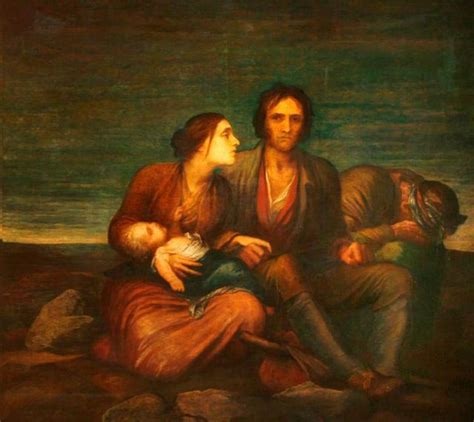

I will post weekly here in the blog, mostly on Irish, Gaelic and other Celtic language literatures and languages, but also on the craft of fiction
Join Our Circle
Weekly tales and tips from éireloom
Email : tighsagainne@fastmail.com (all lower case)
© 2026. All rights reserved.